
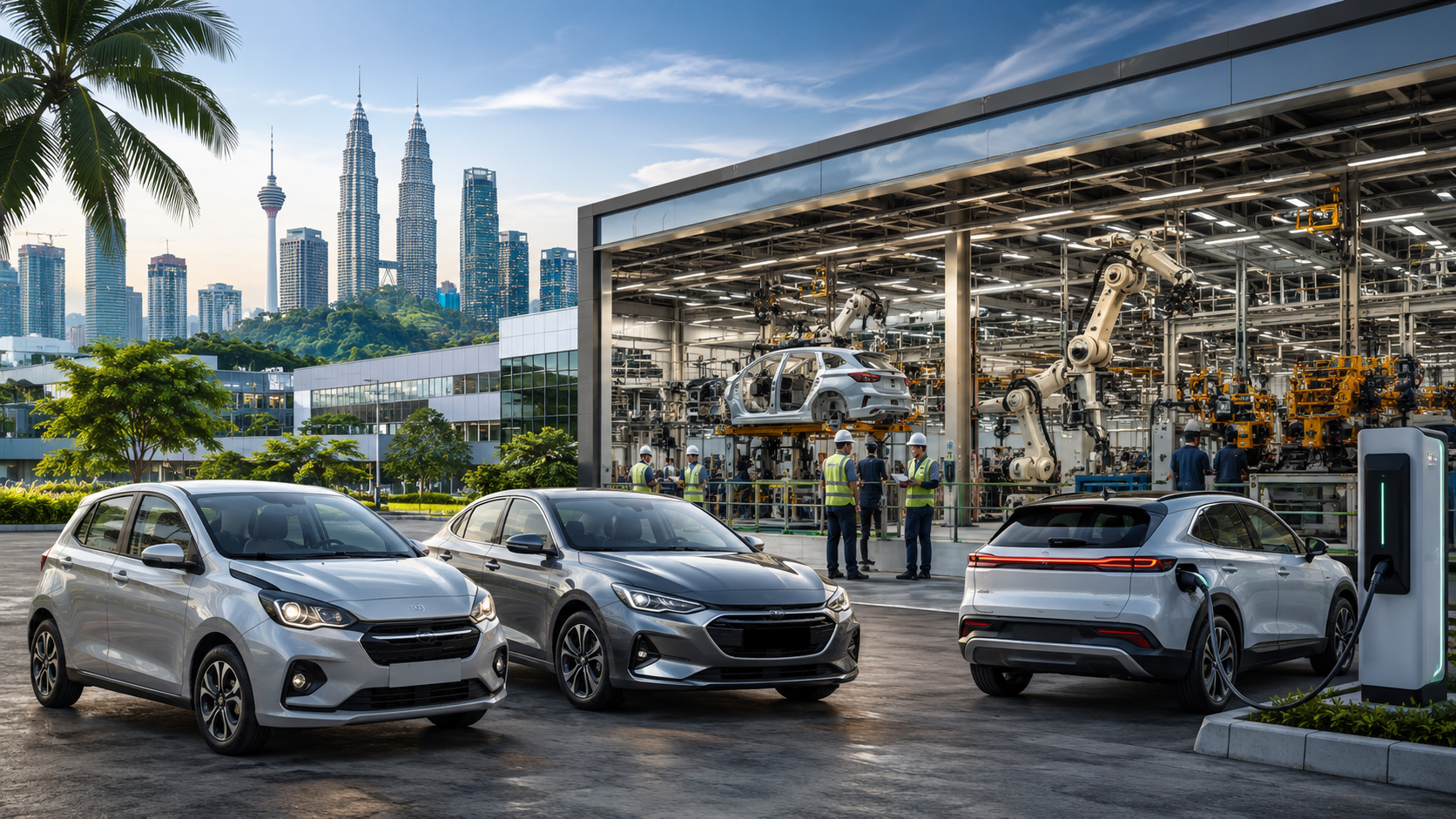
Malaysia’s automotive industry is experiencing a major competitive transformation as local manufacturers and international automotive companies compete for a new generation of consumers. For decades, Malaysia’s car market was dominated by traditional factors such as affordability, reliability, and maintenance costs. However, modern buyers are increasingly considering technology, sustainability, safety features, and digital connectivity when choosing their vehicles.
The competition between national brands such as Proton and Perodua, established Japanese manufacturers like Toyota and Honda, and emerging electric vehicle companies including BYD and Tesla reflects a broader shift happening across Southeast Asia’s automotive sector.
Malaysia is no longer only a market focused on affordable transportation. It is becoming a marketplace where innovation, advanced technology, and brand experience increasingly influence purchasing decisions.
Industry performance data and automotive market updates are regularly published by the Malaysian Automotive Association (MAA):
https://www.maa.org.my/
Proton and Perodua: The Strength of Malaysia’s National Automotive Brands
Proton and Perodua remain two of the most influential automotive companies in Malaysia, with strong customer loyalty built over decades.
Perodua has maintained a dominant position by focusing on practical, economical vehicles designed for everyday Malaysian consumers. Its success comes from understanding local market needs, including affordable pricing, fuel efficiency, compact vehicle design, and low maintenance expenses.
Models such as the Perodua Myvi, Axia, and Bezza continue to attract buyers because they offer value-oriented ownership. For many first-time vehicle owners, Perodua represents an accessible entry point into car ownership.
Proton, meanwhile, has undergone a significant transformation through its partnership with Geely. This collaboration has allowed Proton to improve vehicle design, introduce advanced safety technologies, and strengthen competitiveness against international brands.
The introduction of SUVs and technology-focused models has helped Proton appeal to consumers seeking more premium features while maintaining competitive pricing.
Japanese Automakers Maintain Strong Consumer Trust
Although national brands dominate significant portions of the Malaysian automotive market, Japanese manufacturers continue to maintain strong influence.
Toyota remains one of the most trusted automotive brands globally due to its reputation for durability, resale value, and engineering quality. In Malaysia, Toyota vehicles continue to attract customers who prioritize long-term ownership reliability.
Honda has also established a strong market presence, particularly among consumers looking for stylish designs, driving performance, and advanced features.
Japanese brands benefit from decades of customer confidence. However, they now face increasing pressure as consumers become more interested in electric vehicles and technology-driven mobility solutions.
The traditional advantage of reliability is no longer enough by itself. Automotive companies must now compete in areas such as software integration, battery technology, and digital user experience.
BYD and Tesla Introduce New Competition Through Electric Mobility
The arrival of EV-focused brands has significantly changed Malaysia’s automotive competition.
BYD has gained attention through its strategy of offering technologically advanced electric vehicles at competitive prices. The company’s strength comes from its battery technology, manufacturing scale, and ability to provide multiple EV models for different consumer segments.
Tesla, meanwhile, has introduced a technology-focused ownership experience. The brand’s reputation for software innovation, performance, and global EV leadership has attracted Malaysian consumers interested in premium electric mobility.
The expansion of these brands creates new pressure on existing manufacturers. Local companies must accelerate innovation to remain competitive in an automotive market where technology is becoming as important as mechanical performance.
Changing Malaysian Consumer Behavior in Vehicle Purchasing
One of the most important changes in Malaysia’s automotive industry is the evolution of consumer expectations.
Modern buyers increasingly evaluate vehicles based on:
- Smart connectivity features
- Safety assistance technology
- Environmental impact
- Digital ownership experience
- Vehicle efficiency
- Long-term operating costs
Young Malaysian consumers, particularly those living in urban areas, are showing greater interest in vehicles equipped with advanced technology and sustainable solutions.
Social media, online reviews, and digital automotive platforms have also changed how customers research vehicles before purchasing. Buyers are now more informed and compare specifications, pricing, and ownership experiences before visiting dealerships.
This shift forces automotive companies to compete not only through products but also through digital marketing, customer service, and brand engagement.
The Future of Automotive Competition in Malaysia
Malaysia’s automotive competition will become increasingly technology-driven. Local manufacturers must combine affordability with innovation, while global companies must adapt products to Malaysian consumer needs.
The future winners in Malaysia’s automotive market will likely be companies that successfully balance three key factors: competitive pricing, advanced technology, and customer-focused solutions.
As electric vehicles, connected cars, and smart mobility systems continue expanding, Malaysia’s automotive industry is entering a new era where competition is no longer only about producing vehicles but creating complete mobility experiences.