
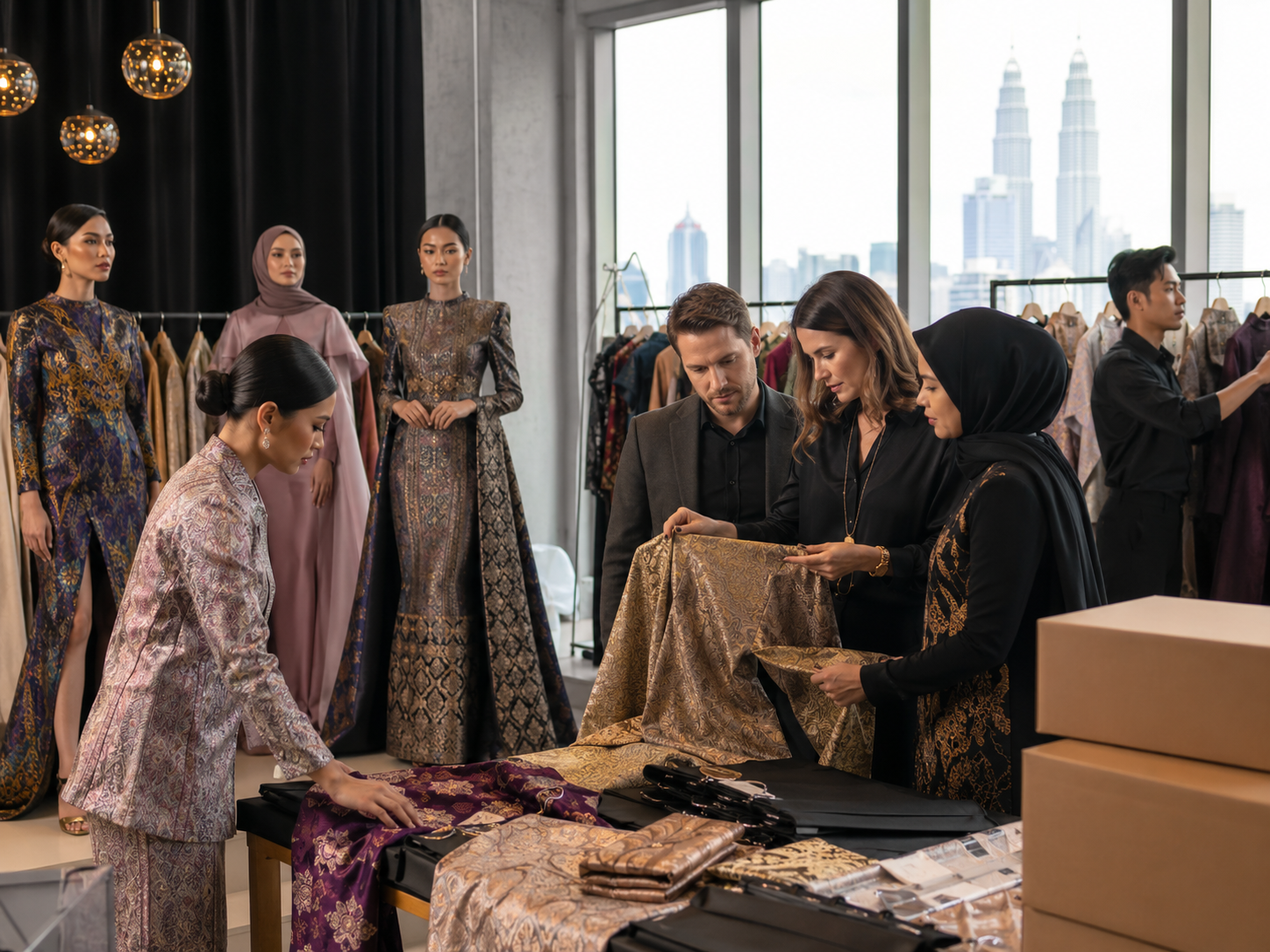
Once known mainly for traditional craft markets, Malaysia’s apparel sector now sends contemporary collections to fashion capitals abroad. The change is being driven by a new generation of designers who see heritage textiles as a launchpad, not a limitation. As a result, Kuala Lumpur-based labels are appearing at international trade shows and on global e-commerce platforms.
Modern Silhouettes Rooted in Local Craft
Instead of abandoning tradition, designers are modernizing songket, batik, and tenun. Jovian Mandagie uses these materials in modest couture that attracts clients from the Gulf states. Khoon Hooi applies local prints to fluid dresses sold in regional boutiques. Alia Bastamam’s minimalist aesthetic integrates handwoven accents, giving her pieces a distinctly Malaysian identity. This approach allows brands to stand out in a global market flooded with generic fast fashion.
Export-Minded Brands Gain Traction
Fiziwoo’s occasionwear is now stocked by retailers in the Middle East, while Innai Red and Nurita Harith serve modest bridal buyers in Singapore, Brunei, and Indonesia. Mimpikita has expanded through regional e-commerce and selected department stores. MIDA’s fashion and textile industry overview notes that Malaysian apparel companies are increasingly focusing on design-driven exports, sustainable materials, and regional branding. The official overview can be accessed here: https://www.mida.gov.my/. It confirms the sector’s shift toward high-value activities rather than low-cost manufacturing.
E-Commerce and Trade Support Accelerate Reach
Platforms such as Zalora, Shopee, and TikTok Shop have removed many traditional barriers to international sales. A designer in Petaling Jaya can now ship a made-to-order gown to London within days. FashionValet, despite its 2024 governance crisis and the sale of stakes by Khazanah and PNB at a significant loss, remains a cautionary but instructive example. The restructuring prompted a stronger focus on unit economics and profitability among Malaysian fashion startups. MATRADE continues to back exporters through grants, overseas missions, and e-commerce onboarding programs.
The Modest Fashion Opportunity
Global spending on modest fashion continues to climb, with estimates placing the sector above US$300 billion per year. Malaysia’s combination of halal-certified production, multicultural design, and established modest wear brands gives it an edge in markets like Saudi Arabia, the UAE, and Turkey. Participation in Jakarta Fashion Week, Dubai Modest Fashion Week, and London Modest Fashion Week has further raised the profile of Malaysian labels among international buyers and stylists.
Obstacles to Overcome
Despite momentum, Malaysian designers must navigate high production costs, fabric import restrictions, and weak protection against design piracy. Many young labels also lack the working capital needed to fulfill large international orders. Industry players are calling for more regional textile sourcing, digital IP registries, and dedicated export financing. By solving these bottlenecks, Malaysia can convert its creative energy into sustained global market share.