
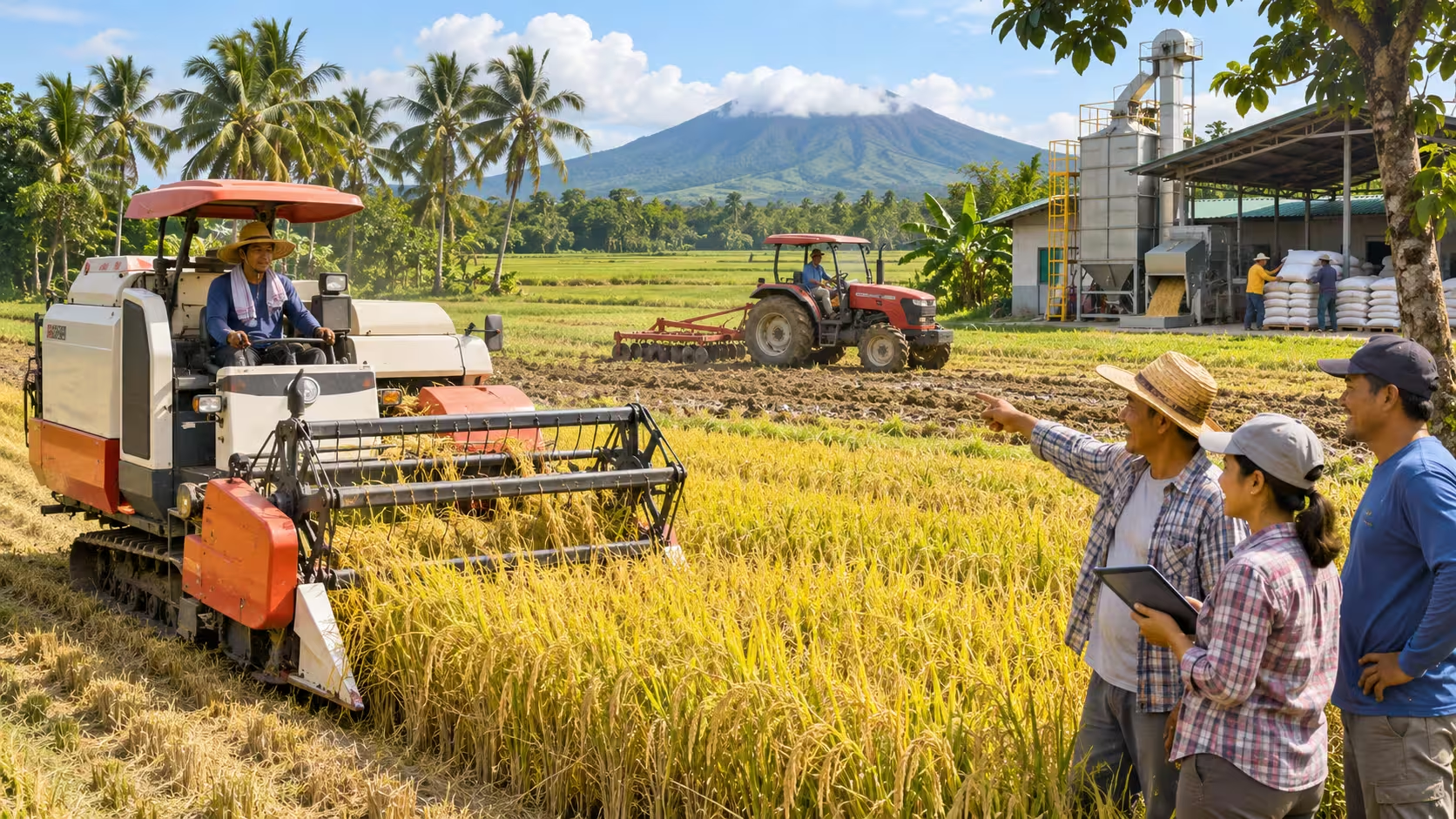
The Philippines is deploying a new generation of postharvest infrastructure—modular cold storage powered by solar and wind, onion-specific cold rooms, and multi-purpose drying pavements—to address losses that have long eroded farm incomes and destabilized food supply. In 2026, the Department of Agriculture (DA) opened facilities in Camarines Sur and Isabela that combine renewable energy, typhoon-resistant engineering, and direct benefits to thousands of farmers and fisherfolk.
Camarines Sur’s Renewable-Energy Cold Storage
In October 2026, the DA opened a solar- and wind-powered modular cold storage facility in San Jose, Camarines Sur, alongside similar units in Garchitorena, Lagonoy, and Tigaon. The four cold storage facilities were worth a total of PHP45.5 million and will benefit over 10,762 farmers, fisherfolk, and other food producers across 10 towns. The San Jose facility’s hybrid power system includes 30 solar panels rated at a minimum of 700 watts each, a three-kilowatt wind turbine, a lithium-ion battery bank with at least 160 kilowatt-hours of capacity, and a 25-kilowatt diesel backup generator. The 40-foot storage unit is designed for a typhoon-prone region with a structural wind-load target of 350 kilometers per hour, and its operating temperature of +1°C to +10°C accommodates vegetables, pineapple, sweet potato, and other high-value crops. Agriculture Secretary Francisco P. Tiu Laurel Jr. said the facilities are “investments in the livelihoods of our farmers, fisherfolk and livestock raisers,” adding that reducing postharvest losses and connecting producers to better markets helps them “earn more from their hard work”.
Isabela’s Onion Cold Storage and Drying Pavement
In March 2026, President Ferdinand R. Marcos Jr. inspected newly completed postharvest facilities in Ramon, Isabela, including the Ambatali Warehouse with Multi-Purpose Drying Pavement and the Ramon Onion Cold Storage Facility. The onion cold storage has a capacity of up to 20,000 bags and could prevent spoilage of around 4,000 to 7,000 bags, helping stabilize year-round supply and prices. The drying pavement can store up to 14,000 cavans of palay and process up to 3,625 sacks per drying cycle, reducing reliance on roadside drying that often damages grain and lowers farmgate prices. Around 1,500 farmers from Isabela and Nueva Vizcaya are expected to benefit from the two facilities.
The High Cost of Wasted Harvests
Postharvest losses remain one of the most persistent inefficiencies in Philippine agriculture. Without cold storage, farmers are often forced to sell quickly at low prices or risk losing their harvest, a dynamic that suppresses incomes and contributes to price volatility. The DA is building cold chain facilities across key food hubs nationwide to form a network that strengthens the food value chain, and the facilities in Camarines Sur and Isabela are part of that broader logistics plan under the Philippine Food Chain Logistics Master Plan 2023–2033. The economic logic is straightforward: every bag of onions or sack of palay saved from spoilage is income retained by the producer, and every day of extended storage gives farmers bargaining power they otherwise lack.
Engineering for Climate and Geography
The design choices in these facilities reflect the physical realities of Philippine agriculture. The Camarines Sur cold storage is explicitly engineered for typhoon exposure, with a wind turbine rated for speeds up to 315 kilometers per hour and a diesel backup to maintain the cold chain during grid outages. The use of renewable energy also addresses the operating-cost problem that has made cold storage expensive in rural areas. By combining solar, wind, battery storage, and a backup generator, the DA is testing a model that could be replicated in other vulnerable, off-grid production areas.