
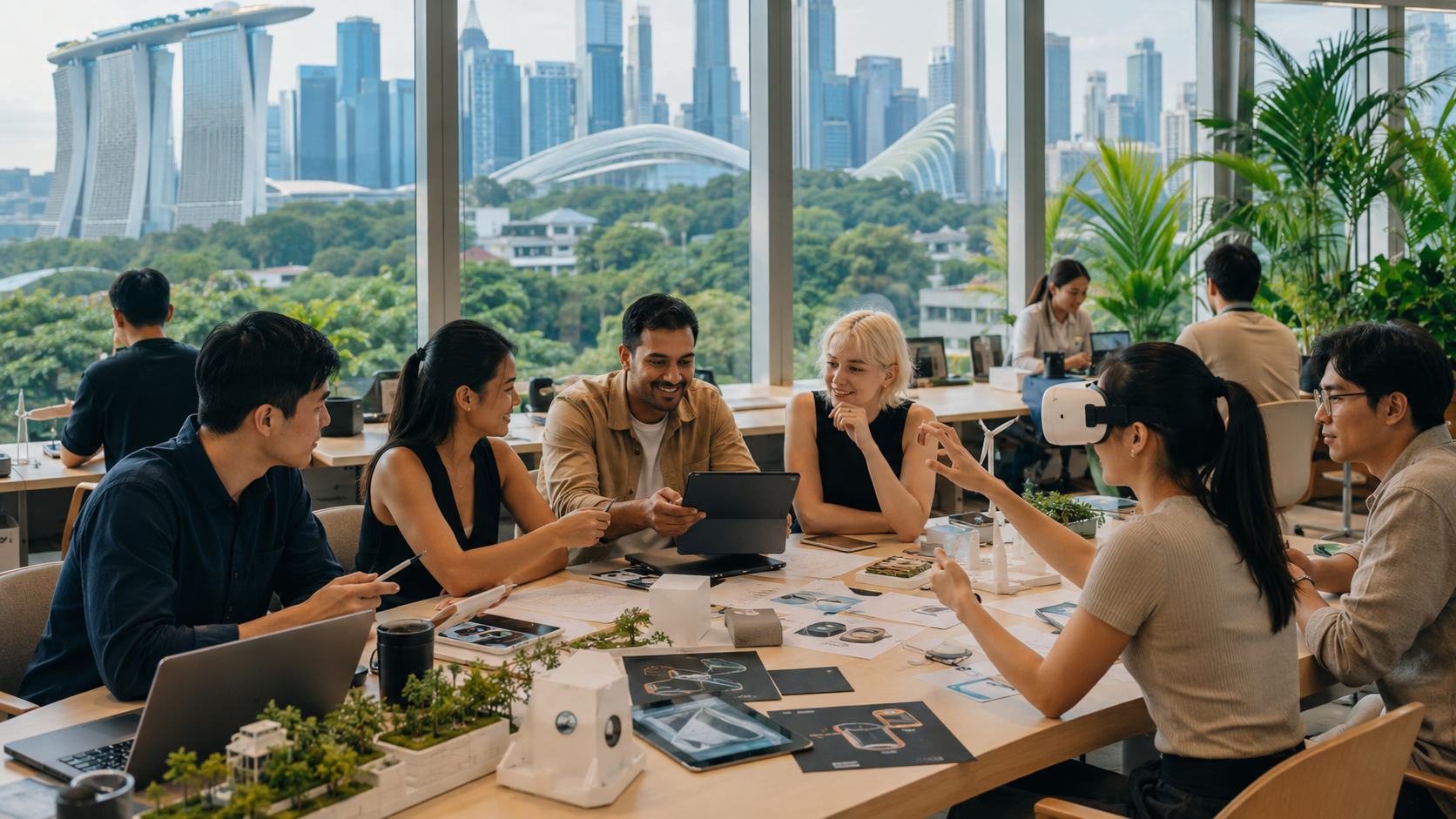
Across Marina Bay’s skyline, a quieter revolution is unfolding behind glass‑walled co‑working spaces and government‑backed accelerators. Singapore’s startup landscape is being reshaped by a wave of creative enterprises—think AI‑powered music composition platforms, immersive virtual‑reality heritage tours, and design‑led health‑tech solutions. These companies share a common thread: they are built to scale internationally from inception, leveraging Singapore’s unique ecosystem to bypass the typical growth constraints faced by creative businesses elsewhere.
The New Definition of a “Creative Startup”
Traditionally, “creative industries” conjured images of film studios and advertising agencies. Today’s Singapore‑based creative startups are far more technologically embedded. They fuse machine learning with visual arts, employ blockchain to authenticate digital fashion, and harness game engines for industrial training simulations. This convergence places them at the sweet spot of high‑value services that command global demand. Because the products are inherently digital, the path to foreign markets requires no cargo ships—only cloud infrastructure and culturally intelligent localization.
Strategic Capital Injection from Unlikely Sources
According to the DealStreetAsia Singapore Venture Capital Report Q1 2026, creative‑tech funding in the city has diversified beyond traditional venture capital. Family offices, corporate innovation units from luxury brands, and even sovereign wealth funds are backing startups that blend creativity with scalable technology. This capital is often “smart money,” bringing distribution channels in fashion retail, hospitality, and media conglomerates. A virtual interior‑design startup, for example, can instantly access showroom partnerships across Asia through its investor’s network.
The Intellectual Property Advantage
Singapore offers one of Asia’s most robust intellectual property regimes, a critical factor when a startup’s primary value rests in trademarks, copyrights, and patents. The Intellectual Property Office of Singapore runs fast‑track schemes and subsidizes IP filings, making it affordable for early‑stage creative companies to protect their assets globally. This legal certainty becomes a bargaining chip in licensing deals with multinational corporations, turning a local design studio into an IP licensing powerhouse.
Cross‑Border Validation Through Regional Headquarters
A startup does not need to uproot itself to test market‑product fit across borders. Many creative founders choose Singapore as their headquarters while running operational teams in cities like Ho Chi Minh City, Bengaluru, or Tokyo. The city’s double‑taxation agreements and the ASEAN digital economy framework streamline royalty flows and service contracts, so revenue generated from a Thai‑language edutainment app can be efficiently repatriated. This hub‑and‑spoke model transforms a small company into a multi‑country operator far faster than competitors based in larger, more insular markets.
A Culture That Celebrates Experimentation
Singapore’s historical narrative—from a trading post to a knowledge economy—has instilled a cultural appetite for reinvention. Annual events like the Singapore Design Week and the Creators’ Summit provide stages for creative founders to showcase prototypes to global media and investors. The Ministry of Culture, Community and Youth actively funds cross‑disciplinary collaborations, signaling that the state views creative innovation not as a niche but as a pillar of economic strategy.
For creative startups, Singapore is not just a launchpad; it is a deeply integrated platform where capital, protection, and market access converge—making global scale less a distant ambition and more an executable business plan.