
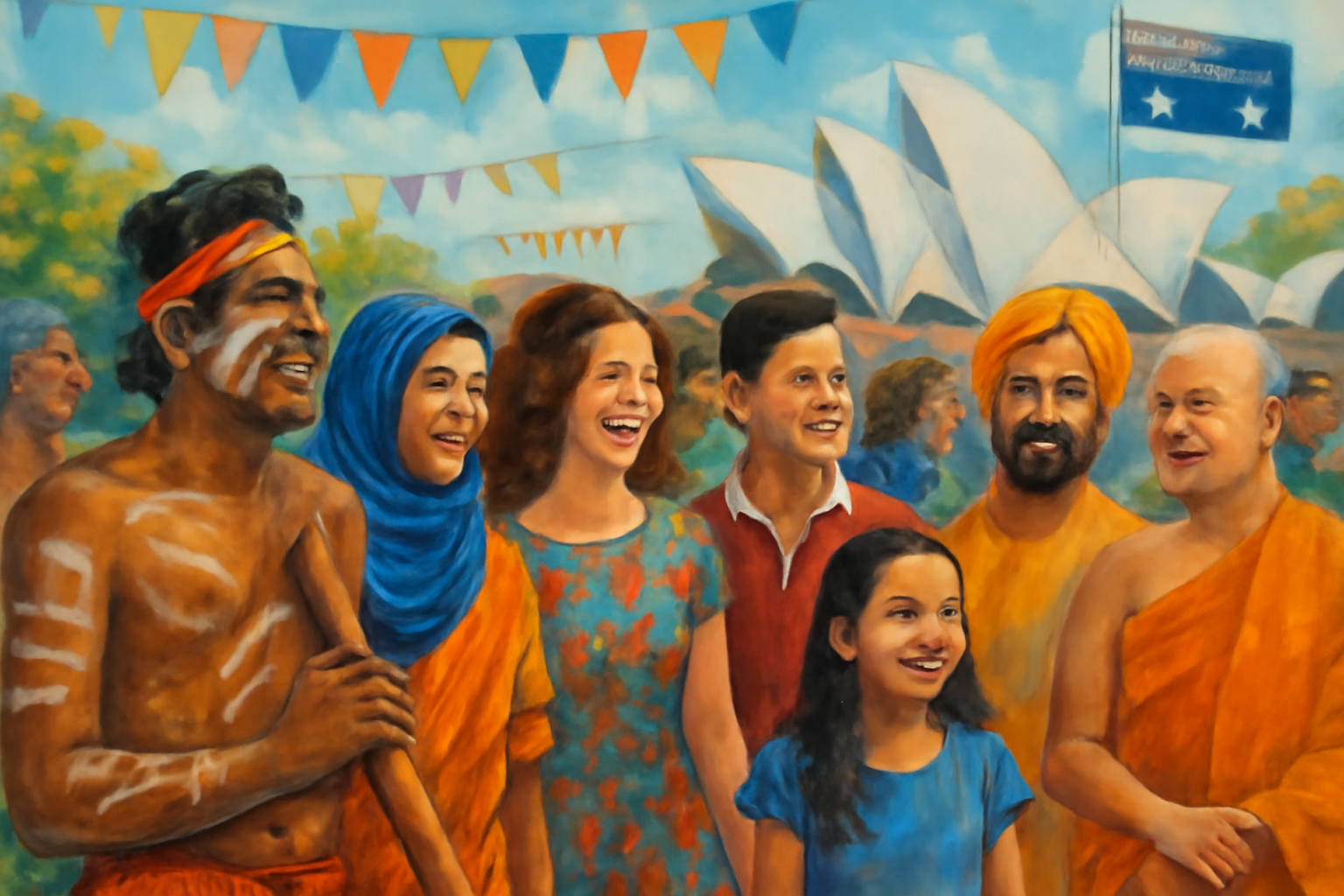
As the original inhabitants of Australia, the Aboriginal and Torres Strait Islander communities have a rich history and culture. Despite a long history of challenges due to colonization and oppression, they have maintained a strong cultural identity. In the context of cultural diversity, their role is vital in shaping Australia’s multicultural and harmonious society.
Aboriginal communities play an important role in introducing profound cultural values, such as respect for the land and oral traditions. As keepers of ancestral traditions and stories, Aboriginal culture teaches the importance of connections to the land and community. This also creates an opportunity for intercultural dialogue, where broader Australian society can learn from the insights held by the Aboriginal communities.
In recent years, there has been a greater effort to recognize the contributions and rights of Aboriginal peoples through legal recognition and more inclusive government policies. For example, the recognition of Uluru as a sacred site for Aboriginal communities and efforts to preserve their languages and traditions.
The role of Aboriginal communities in Australia’s multicultural society continues to evolve, and their contributions are crucial in enriching the country’s cultural diversity. This also demonstrates that Australian society values and celebrates all cultures, both Indigenous and migrant.