
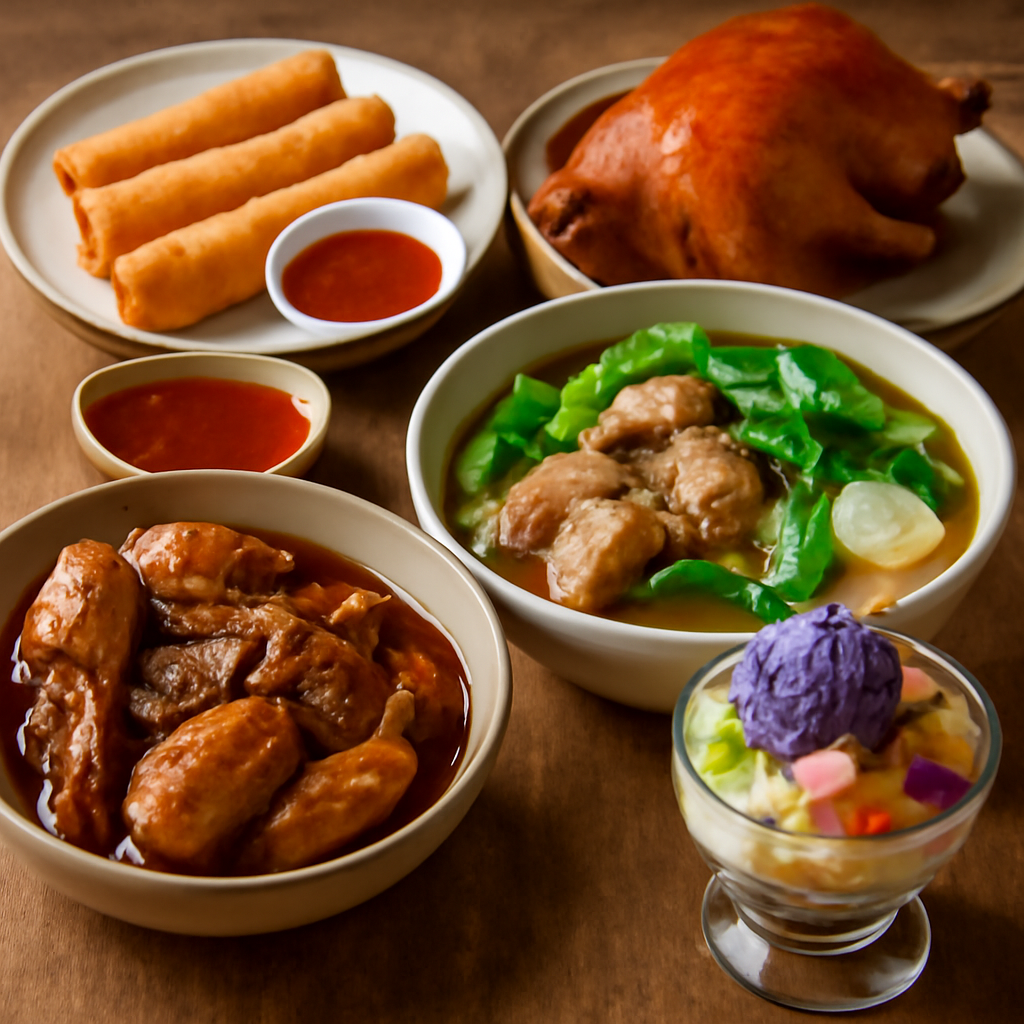
The Philippines is a country that offers a wide variety of unique and delicious dishes, from sour and savory soups to sweet desserts. Filipino cuisine is deeply tied to the country’s history, culture, and traditions, and every dish tells its own story. Whether it’s the tangy and spicy flavors or the sweet and refreshing desserts, Filipino food provides a feast for both the eyes and the palate.
One of the most popular dishes is Adobo, a dish made with chicken or pork cooked in a mixture of soy sauce, vinegar, garlic, and spices. The slow cooking process allows the flavors to meld together, making Adobo rich and flavorful. Every family in the Philippines has its own version, making it a highly customizable dish that reflects the uniqueness of Filipino home cooking.
Another favorite Filipino dish is Sinigang, a tangy and savory soup made with tamarind as its base. Sinigang is often prepared with pork, fish, or shrimp, and it’s served with an assortment of vegetables like water spinach, eggplant, and radish. This comforting dish is perfect for rainy days or when you want something light yet filling.
For a quick and tasty snack, Lumpia is a popular choice. Lumpia consists of thin wrappers filled with a variety of ingredients, such as vegetables, meat, or shrimp, which are then deep-fried until crispy. It’s often served with a dipping sauce, either sweet or tangy, making it a perfect appetizer or snack for any occasion.
When it comes to festive meals, Lechon is the star of the show. Lechon is a whole pig roasted over an open flame, creating a crispy skin and tender meat. It’s often the centerpiece of large gatherings, celebrations, and festivals, symbolizing wealth and happiness in Filipino culture.
For dessert, Halo-Halo is the go-to treat. This refreshing dessert is made by combining shaved ice with various ingredients like fruits, beans, agar-agar, and coconut milk, topped with a scoop of ice cream. It’s a perfect way to cool off during the hot summer months, offering a balance of sweetness and texture.
Filipino food is a reflection of the country’s rich culture and history. Each dish is a celebration of local ingredients, traditions, and the diverse influences that have shaped the Philippines over the centuries.