
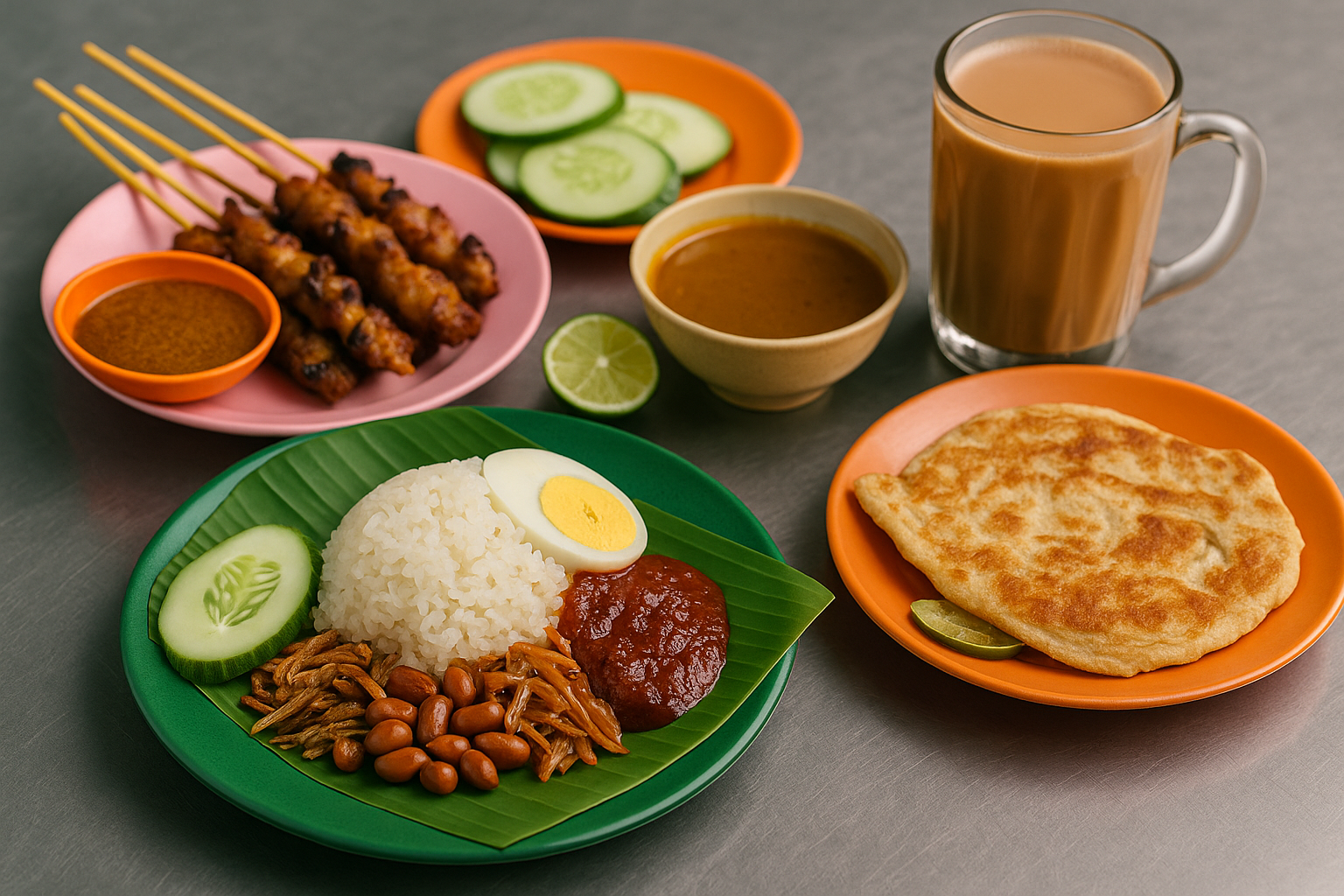
Malaysian food isn’t just a list of dishes; it’s a choreography of daily rituals and social habits. From dawn kopitiam breakfasts to midnight mamak suppers, the nation’s rhythm is punctuated by meals that emphasize sharing, accessibility, and sensory pleasure.
Mornings split along sweet and savory lines. In cities, kaya toast—crisp bread with coconut jam and cold butter—meets soft-boiled eggs splashed with soy and white pepper. Elsewhere, nasi lemak serves as a hearty start: coconut rice, anchovy sambal, peanuts, and cucumber, with optional fried chicken or squid. Roti canai and dhal offer flakiness plus warmth, paired with teh tarik or kopi “O” (black, no milk).
Lunch is pragmatic and abundant. Nasi campur (mixed rice) and economy rice stalls present a buffet of stir-fries, curries, braises, and sambals; diners point and choose, building plates that balance heat, greens, and protein. In Penang, a quick bowl of char kway teow or Hokkien mee; in Terengganu, nasi dagang; in Sarawak, kolok mee—each region reaches for its comfort classic.
Evenings are social. Families gather at seafood restaurants for ikan bakar (grilled fish) with air asam dipping sauce, or at Chinese eateries for claypot rice and steamed tofu with superior soy. Mamak stalls—open late and welcoming—become living rooms without walls. Maggi goreng, tandoori chicken, and roti tissue (a towering, crispy spectacle) share tables with football on big screens and chatter mixing Malay, English, and Tamil.
Etiquette is relaxed but meaningful. Eating with the right hand at Malay restaurants is common; banana leaf rice meals encourage mixing curries and rice by hand to appreciate texture. Sharing is the norm: multiple dishes center a table, encouraging conversation and comparison. Halal standards guide many kitchens, ensuring Muslim diners’ inclusion while non-halal eateries also exist, especially in Chinese enclaves.
Condiments individualize plates. Bowls of pickled green chilies, sambal belacan, soy sauces (light, dark), and vinegar allow micro-adjustments. A squeeze of calamansi brightens noodles; fried shallots add perfume and crunch. Ice drinks—air bandung (rose milk), limau ais (lime juice), barley—chase the tropical heat, with cendol and ais kacang offering dessert-cool finales.
Festivals turn meals into rituals. Hari Raya Aidilfitri means ketupat woven from palm leaves, rendang, and serunding (floss). During Chinese New Year, families toss yee sang high for prosperity. Deepavali brings murukku’s crunch and spiced sweets. Weddings and community gatherings feature nasi minyak, biryani, and whole roasted meats—food as celebration and glue.
Modern life is reshaping habits without severing roots. Delivery apps bring hawker fare home; cafés craft gula Melaka lattes; chefs riff on classics—laksa ravioli, nasi lemak burgers—while hawker masters guard traditions. Yet the constants endure: affordability, variety, and conviviality. In Malaysia, eating is a social contract—come as you are, pull up a plastic stool, and make room for one more plate.