
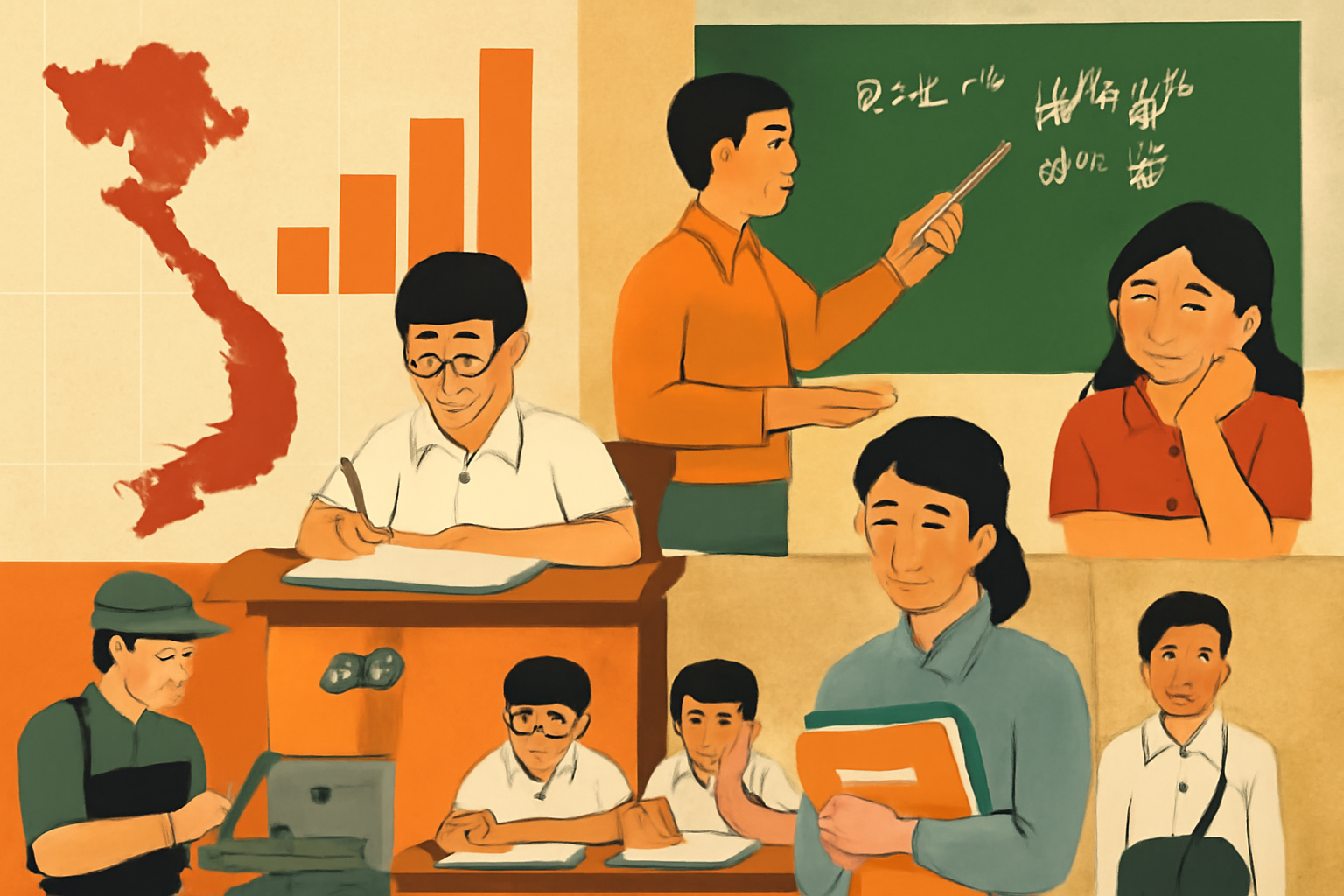
Vietnam’s education system has made significant strides over the years, particularly in terms of improving access to education and the quality of academic results. With a strong focus on literacy and vocational training, the country has set a high standard in Southeast Asia. However, like any system, it faces significant challenges that hinder its growth.
Successes
Vietnam has been highly successful in increasing educational access. The government has prioritized education and implemented policies to ensure that all children receive at least a basic level of education. The result has been one of the highest literacy rates in the region, with adult literacy standing at approximately 94%.
In addition to literacy, Vietnam has achieved impressive results in international educational rankings. In PISA assessments, Vietnamese students have outperformed their counterparts from many developed nations, excelling in key areas such as mathematics, science, and reading. This performance is indicative of the system’s ability to deliver strong academic results despite relatively modest investment compared to wealthier countries.
Moreover, Vietnam has been successful in addressing youth unemployment through its focus on vocational education. The government has invested in developing vocational schools that provide students with practical skills, preparing them for careers in sectors like manufacturing, technology, and services. This focus on skills-based education has helped improve the employability of young people and supports the country’s growing economy.
Challenges
Despite these successes, Vietnam faces several challenges in its education system. One of the most significant is the continued use of rote learning, which often limits students’ ability to think critically and creatively. While students excel in standardized testing, they may struggle to apply their knowledge in real-world contexts. This highlights the need for reforms that encourage more interactive, student-centered learning approaches.
Another challenge is the gap in educational quality between urban and rural areas. While cities like Hanoi and Ho Chi Minh City have access to well-resourced schools and highly trained teachers, students in rural areas often lack these advantages. This discrepancy results in uneven educational outcomes across the country, with rural students having fewer opportunities for academic success.
Teacher shortages also remain a major issue. Although Vietnam has made efforts to increase the number of teachers, many are still underqualified or lack the necessary training to implement modern teaching methods effectively. The government must continue to focus on teacher development to ensure that educators are well-equipped to meet the demands of contemporary classrooms.
Conclusion
Vietnam’s education system has made significant progress in recent decades, achieving high literacy rates and strong performance in international assessments. However, challenges remain in terms of teaching methods, regional disparities, and teacher qualifications. Addressing these challenges will be crucial for Vietnam to continue improving its education system and preparing students for success in a rapidly changing world.