
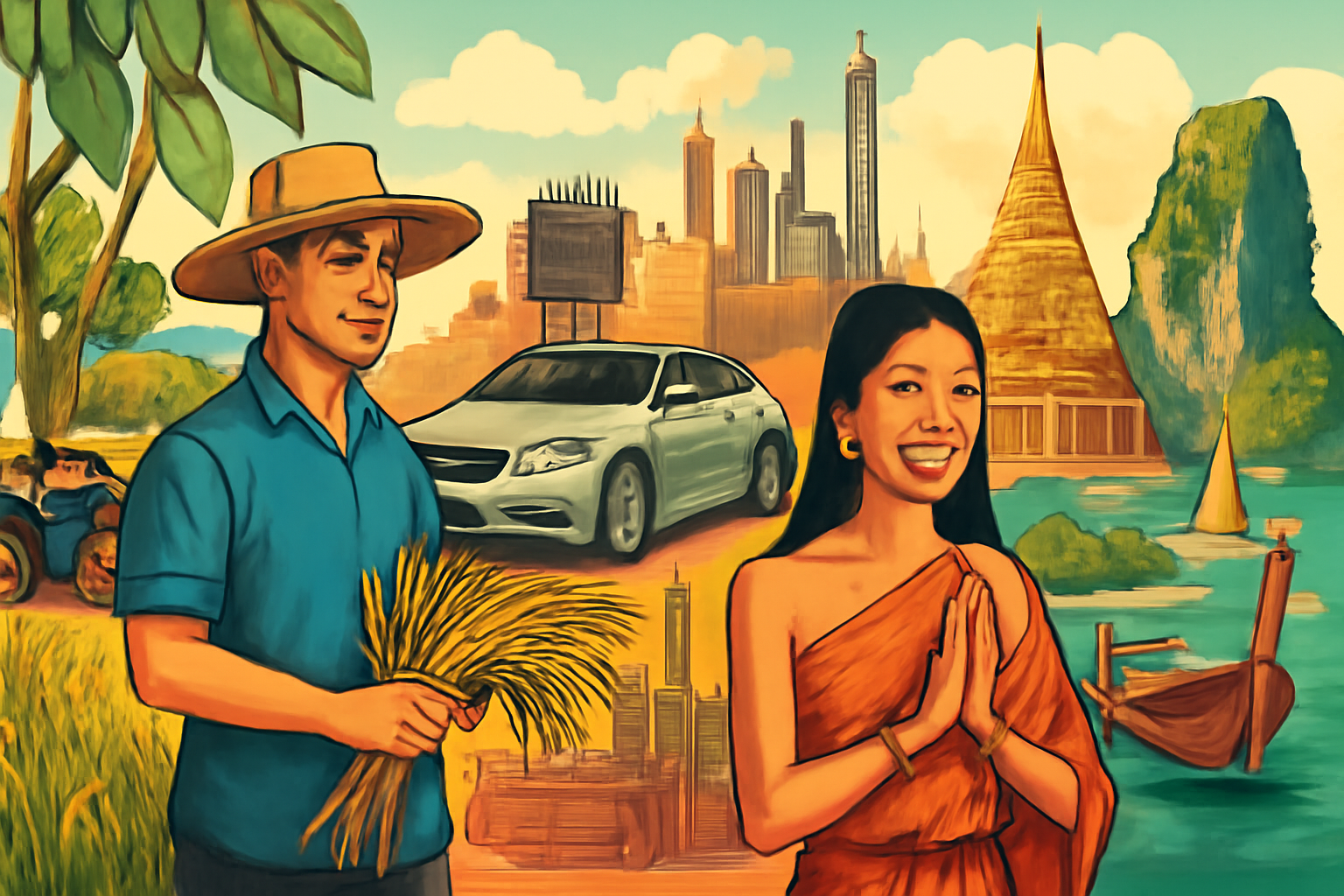
Thailand’s economic structure is characterized by the significant roles played by agriculture, industry, and tourism. Each of these sectors has developed over time, contributing to the country’s prosperity and global standing. As Thailand continues to modernize and diversify its economy, these three sectors remain at the core of its growth trajectory.
The Role of Agriculture in Thailand’s Economy
Thailand’s agricultural sector is one of the country’s oldest and most important economic drivers. The nation’s favorable climate and fertile soil support the production of a wide range of crops, including rice, rubber, sugar, and cassava. Rice, in particular, is a key agricultural product, and Thailand is one of the world’s leading rice exporters.
Agriculture continues to support millions of people, especially in rural areas, where farming remains the primary livelihood. However, as urbanization increases and the industrial sector grows, the contribution of agriculture to the GDP has declined. Despite these changes, the government has sought to modernize the sector through initiatives aimed at improving productivity, sustainability, and food security.
Industrialization and Economic Expansion
Over the past few decades, Thailand has experienced rapid industrialization, which has been a key factor in its economic development. Manufacturing, particularly in the automotive and electronics industries, has become a major contributor to the country’s GDP. Thailand is a leading automobile manufacturer in Southeast Asia, with numerous international companies setting up production plants in the country.
The electronics sector also plays a vital role in Thailand’s industrial growth. The production of electronic components, such as semiconductors and mobile phones, has positioned Thailand as an integral part of global supply chains. The “Thailand 4.0” initiative aims to transform the industrial landscape by focusing on high-tech industries, such as robotics, artificial intelligence, and digital technology, ensuring that the economy remains competitive in the global market.
The Impact of Tourism on Thailand’s Economy
Tourism is one of the most important sectors in Thailand’s economy, contributing a significant portion of the country’s GDP. Thailand is famous for its beautiful landscapes, rich culture, and historical landmarks, making it one of the top tourist destinations in the world.
In 2019, Thailand welcomed nearly 40 million international tourists, who brought billions of dollars into the country. The tourism sector creates millions of jobs and stimulates growth in other sectors, such as hospitality, retail, and entertainment. The Thai government continues to promote tourism through various campaigns and initiatives, focusing on diversifying the types of tourism offered, including eco-tourism, medical tourism, and luxury tourism.
Conclusion
Thailand’s economic success is largely due to its strong agricultural base, thriving industrial sector, and vibrant tourism industry. Agriculture provides essential resources and employment, industry drives technological innovation and export growth, while tourism generates significant revenue and supports a wide range of businesses. Together, these sectors have helped Thailand achieve sustained economic growth and prosperity.