
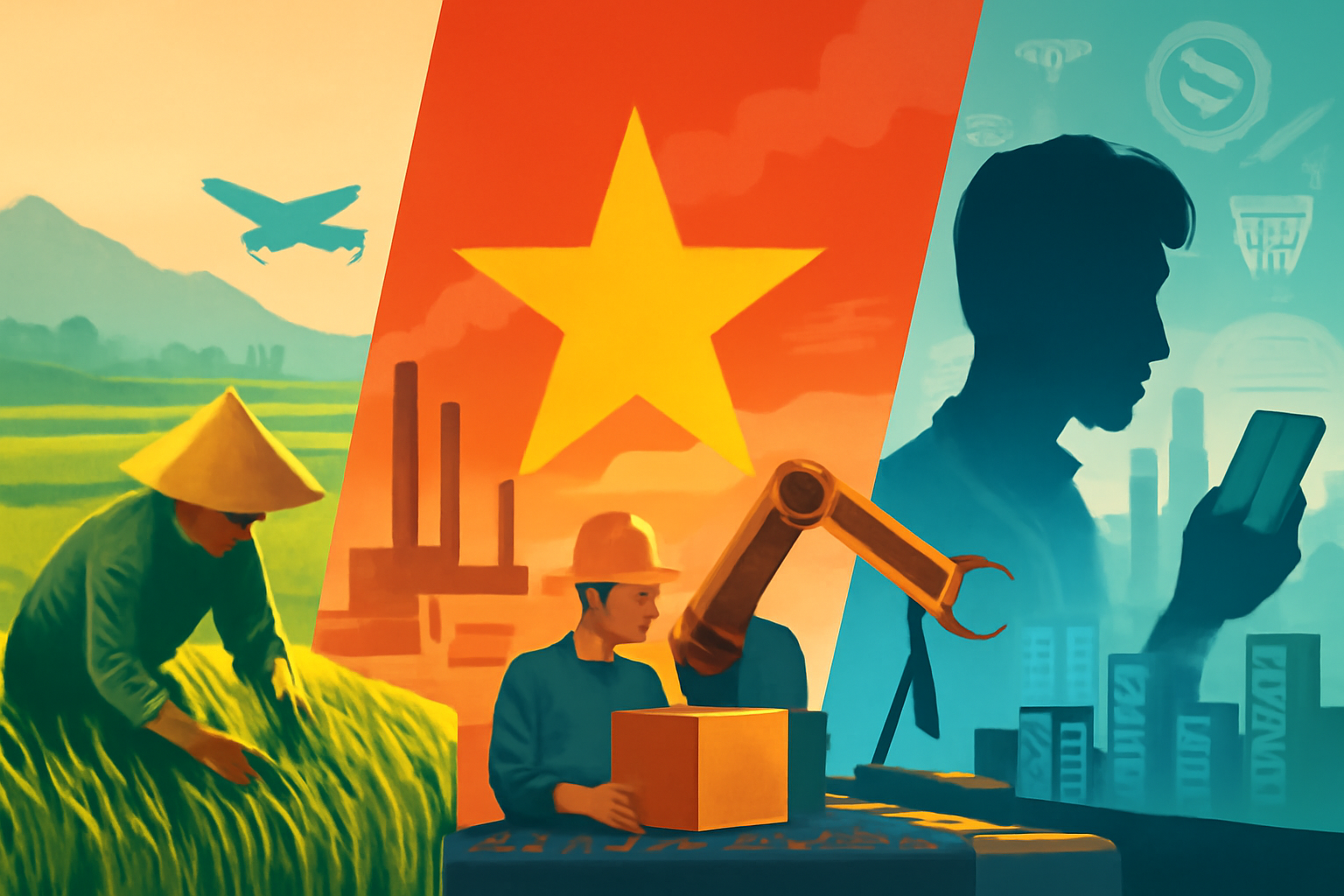
Vietnam’s economy has experienced an extraordinary evolution. From an agricultural base that once dominated the nation’s output, it has transformed into a diverse and competitive economy, with significant strides in industry and technology. This transition showcases Vietnam’s commitment to development and its ability to embrace change in an increasingly interconnected world.
Agricultural Beginnings: A Pillar of Stability
For centuries, Vietnam’s agricultural sector formed the core of its economy. Rice farming, in particular, was essential for sustenance and export, making Vietnam one of the world’s top rice producers. The agricultural industry provided jobs for a majority of the population, and the country’s rural areas were reliant on farming for both economic and social stability.
However, in the face of global challenges such as economic recessions and climate change, Vietnam began recognizing the need for economic diversification. During the 1980s, the Đổi Mới reforms marked a turning point, transforming Vietnam’s economic structure by promoting more market-oriented approaches and gradually reducing state control over agriculture.
Industrial Growth: From Agriculture to Manufacturing Powerhouse
Vietnam’s industrialization began gaining momentum in the 1990s as a result of its favorable policies toward foreign direct investment (FDI) and manufacturing. The country’s low labor costs and strategic location in Southeast Asia attracted international investors, particularly in sectors such as electronics, textiles, and construction materials.
Today, the manufacturing sector is a critical component of Vietnam’s economy. Notably, the electronics industry has thrived, with global companies such as Samsung, LG, and Foxconn setting up massive factories in the country. These investments have elevated Vietnam’s position in the global supply chain, creating high-paying jobs and contributing to export growth.
Technological Innovation: Paving the Way for a Digital Economy
Vietnam’s transition to a technology-driven economy has been one of the most impressive aspects of its transformation. The country has become a regional leader in digital technology, spurred by government policies aimed at fostering innovation and entrepreneurship. The rise of digital startups and e-commerce platforms has been particularly significant, with companies such as Tiki, Zalo, and MoMo becoming household names.
Vietnam’s growing tech sector has also contributed to its economic growth by attracting foreign tech companies and investors. The government’s focus on digital infrastructure development, coupled with its support for the digital economy, has set the stage for continued growth in this sector.
Looking Ahead: Challenges and Opportunities for Vietnam
As Vietnam continues to evolve, the road ahead is filled with both challenges and opportunities. The country needs to invest further in education and skill development to ensure its workforce can meet the needs of the modern economy. Infrastructure, too, must continue to develop to support industrial and technological expansion.
Nonetheless, Vietnam’s shift from agriculture to industry and technology is already bearing fruit, positioning the country as one of the most dynamic economies in the region.