
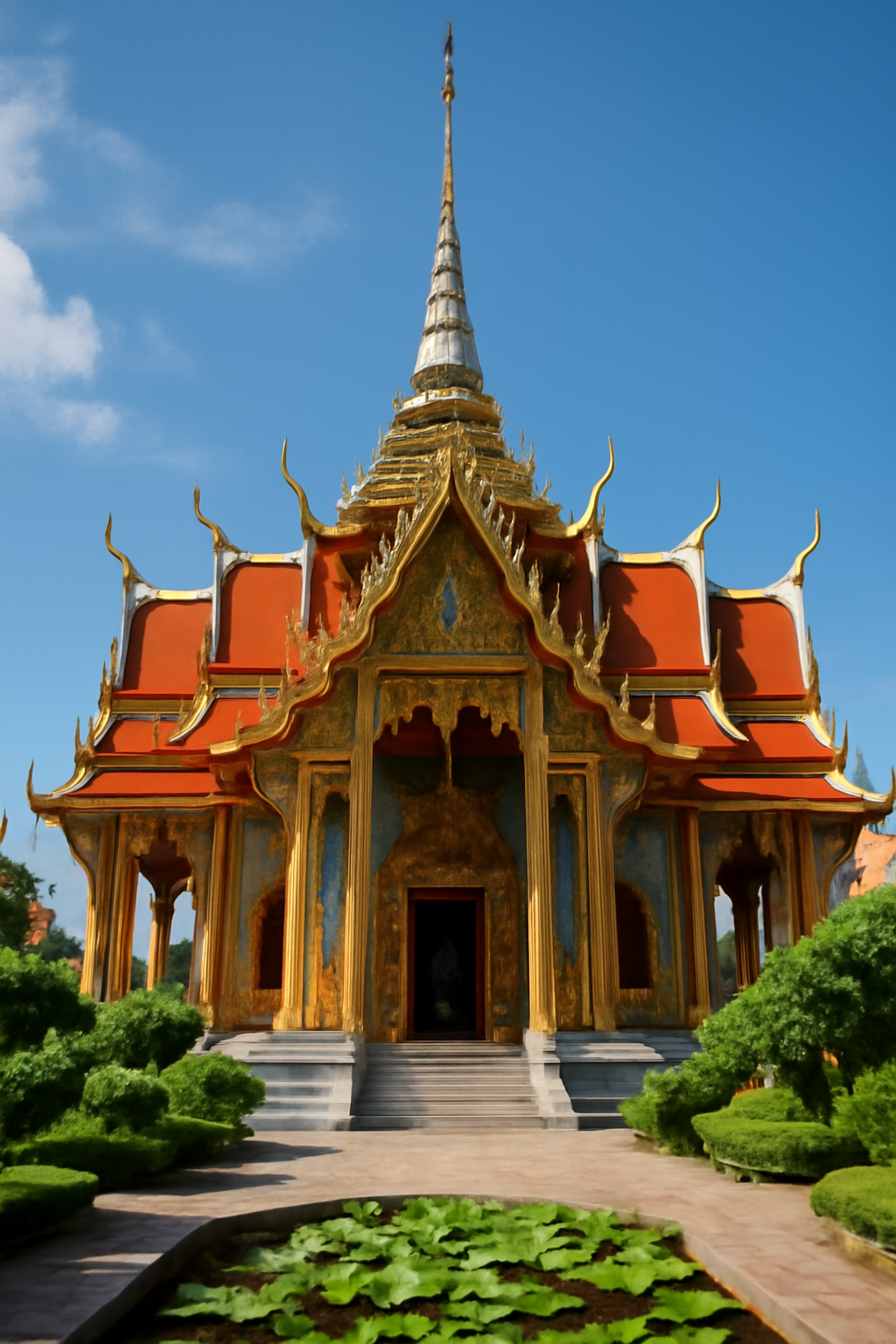
The architectural beauty of Thai temples, or wat, reflects the profound connection between art, culture, and spirituality in Thailand. These temples serve as focal points for Buddhist worship and are designed to create a harmonious space for meditation, prayer, and reflection. Every element, from the layout to the decorative details, is infused with symbolic meaning, guiding both worshippers and visitors toward a deeper understanding of Buddhist philosophy and Thailand’s rich cultural heritage.
The central feature of any Thai temple is the towering prang, a spire that reaches toward the sky. The prang symbolizes Mount Meru, the center of the Buddhist universe, and its upward-reaching design represents the spiritual ascent towards enlightenment. Often elaborately decorated with gold leaf, mosaics, and intricate carvings, the prang serves as both a physical and symbolic focal point, directing the worshipper’s attention upward, toward the divine.
Inside the temple, the vihara, or main hall, is the space where religious ceremonies and prayers take place. The interior of the vihara is typically filled with statues of the Buddha, each representing a different aspect of his life and teachings. These statues are often made of bronze, gold, or wood and are designed to inspire devotion and reflection. The walls of the vihara are adorned with murals that depict the Buddha’s journey to enlightenment, and these murals offer a vivid portrayal of key Buddhist concepts such as compassion, mindfulness, and the nature of suffering.
The roofs of Thai temples are another distinctive feature. Designed with multiple tiers, the sweeping curve of the roof evokes the image of a lotus flower, a symbol of spiritual purity. The design of the roof is not only beautiful but also serves a practical purpose, helping to divert rainwater away from the temple’s foundation. The roofs are often decorated with intricate carvings and gilded details that enhance the overall aesthetic of the temple.
Gold plays a central role in Thai temple architecture. Gold is seen as a symbol of purity and spiritual enlightenment in Buddhist belief, and it is often used to adorn statues, murals, and architectural elements. The use of gold leaf, in particular, is widespread in Thai temples, where worshippers are encouraged to make offerings by placing small pieces of gold leaf on Buddha statues as a sign of respect and devotion.
The temple grounds are carefully designed to create an atmosphere of peace and tranquility. Many temples feature gardens with lotus ponds, trees, and flowers that symbolize the beauty and serenity of the Buddhist path. The layout of the temple is intended to create a space for contemplation, reflection, and connection with nature, further reinforcing the spiritual practices that take place within.
The architecture of Thai temples is a testament to the creativity, artistry, and spiritual depth of the Thai people. Through their design and decoration, these temples provide an opportunity for both worshippers and visitors to immerse themselves in the teachings of Buddhism, while also appreciating the beauty of Thai artistic traditions. The stunning temples are more than just places of worship—they are living works of art that continue to inspire awe and reverence in all who encounter them.