
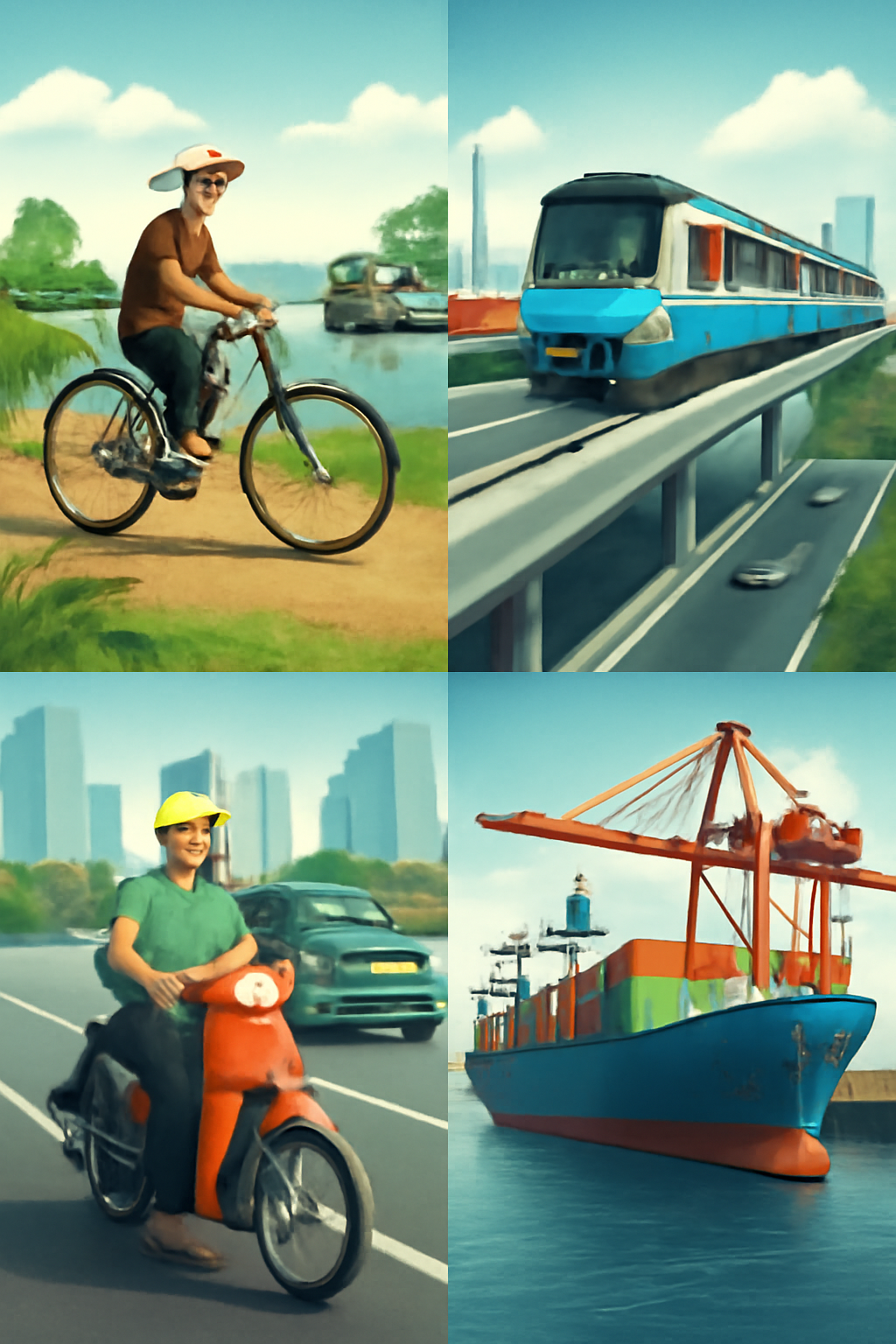
Vietnam’s transportation system has evolved dramatically in the past few decades, adapting to the country’s rapid population growth and economic development. Once limited to informal modes of transport, the nation’s infrastructure has undergone a transformation, with new roads, modern railways, and urban transit systems emerging to support both economic growth and the demands of an expanding urban population.
Before the reforms of the late 20th century, Vietnam’s transportation was centered around traditional means of travel. In rural areas, the waterways served as the primary mode of transportation, while the cities had limited road networks that struggled to accommodate even basic traffic. Urbanization was slow, and the country’s transportation system was not built to handle the increasing demands of modern life.
Following the economic reforms of the 1980s, Vietnam began investing heavily in infrastructure. The motorbike, which had been in use for decades, became the dominant form of transportation in cities, helping to alleviate the constraints of inadequate public transport options. In the 1990s and 2000s, major roads and highways were constructed to better connect the cities and facilitate trade.
More recently, the focus has shifted to sustainable and efficient transportation systems. The Vietnamese government has invested in large-scale projects such as the development of metro systems in major cities. Hanoi’s Metro, which opened in 2021, is a clear sign of the country’s commitment to modernizing urban transportation. Similarly, Ho Chi Minh City’s Metro is expected to be completed in the near future, bringing much-needed relief to the city’s heavily congested roads.
Additionally, improvements have been made to the country’s intercity and freight transportation systems. National expressways, such as the North-South Expressway, have helped to improve connectivity across regions, while ports have seen expansions to accommodate the growing volume of international trade. These developments are essential in supporting Vietnam’s continued economic growth, as efficient transport systems play a central role in facilitating trade and commerce.
Ride-sharing services, such as Grab, have become an integral part of urban mobility. These platforms provide on-demand services that offer more convenience and flexibility than traditional taxis. This trend is also driving the development of new transport solutions, such as electric scooters and shared bike services, which are helping to reduce traffic congestion and promote more eco-friendly transportation options.
Vietnam’s transportation sector is expected to continue evolving in the coming years, with investments in rail infrastructure, sustainable transport solutions, and improved urban transit networks. These initiatives will play an essential role in improving the quality of life for citizens and ensuring the continued success of the Vietnamese economy.