
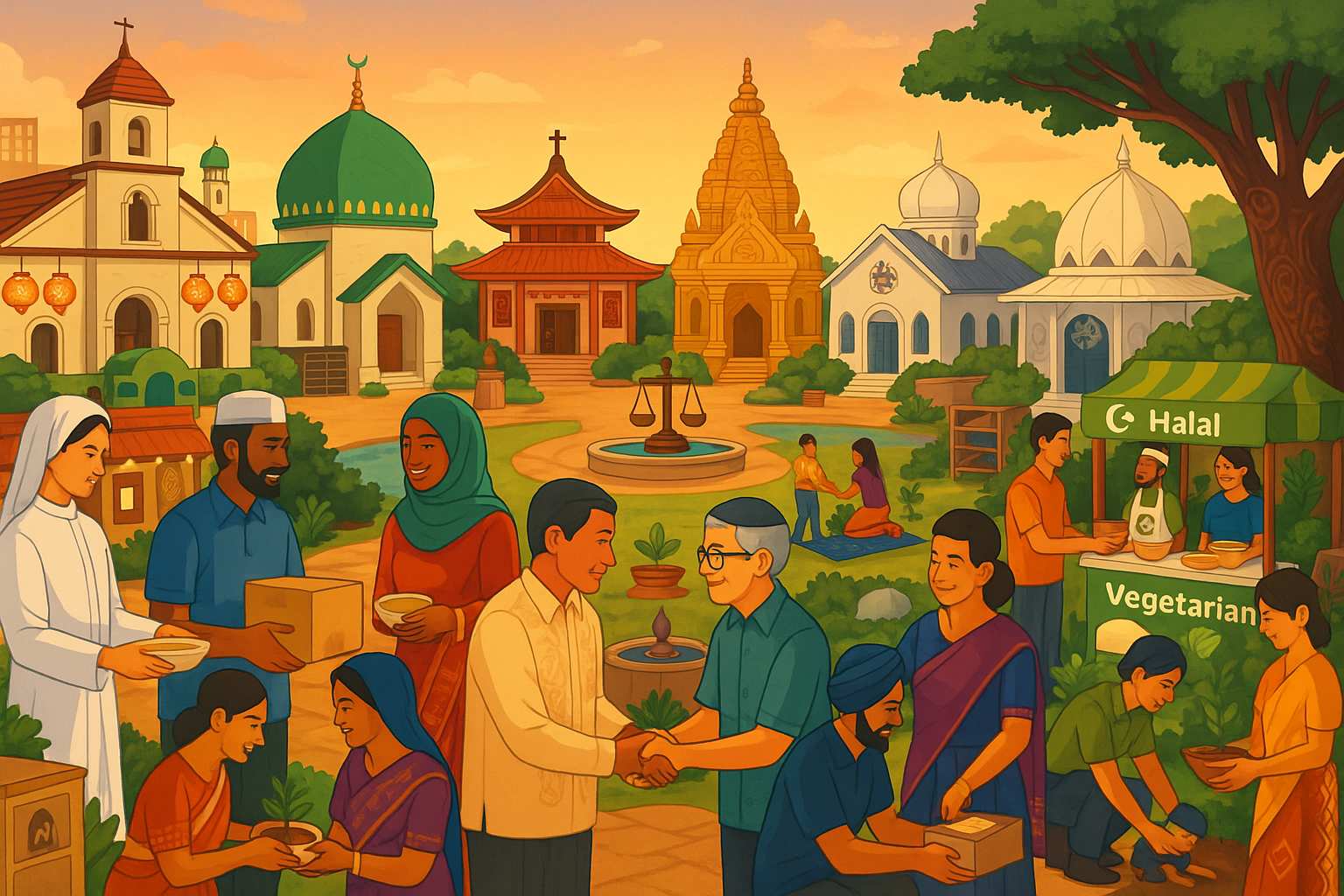
Interfaith dialogue in the Philippines is most credible when it moves from conference halls to barangay gyms and evacuation centers. Decades of work by clerics, educators, and volunteers have produced a repertoire of cooperation that citizens now expect in times of calm and crisis alike.
Religious leaders in Mindanao pioneered regular dialogue during periods of armed conflict, fostering channels that later proved crucial for peace processes. Meetings among Catholic bishops, Protestant pastors, and Muslim ulama created habits of consultation—joint statements against kidnapping, protocols for safe passage of civilians, and coordinated aid after skirmishes. Those habits scaled up during disasters: typhoons, earthquakes, volcanic eruptions, and conflict‑driven displacement.
The playbook is by now familiar. Faith‑based networks map congregations and mosques to identify vulnerable households; youth groups assemble hygiene kits; parishes open kitchens; Islamic charities handle halal food supply; the Buddhist Tzu Chi Foundation mobilizes cash‑for‑work. Information is exchanged rapidly via clergy WhatsApp groups, with local governments looping in to streamline distribution and avoid duplication.
These coalitions extend into development work. Micro‑enterprise training for widows of conflict, psychosocial support for children, and community mediations over land are often co‑branded by interfaith partners. Joint environmental projects—reforestation of watersheds, coastal cleanups, and plastic‑free fiestas—frame stewardship as a shared moral duty. Universities host certificate courses in dialogue and peace education, sending graduates to run municipal programs or advise school divisions.
Cultural initiatives reinforce mutual understanding. Theaters stage Muslim‑Christian‑Lumad stories; museums curate exhibits on textiles, calligraphy, and images; radio dramas dramatize misunderstandings and repair. City festivals allocate budget for halal food stalls and prayer areas, while Christian parishes invite neighbors to iftar. These gestures move tolerance from polite abstraction to practical hospitality.
Tensions remain real: misinformation on social media, politicized rhetoric during elections, and the occasional flashpoint over blasphemy or dress. The response has been more training—fact‑checking workshops for clergy and youth, digital literacy modules in senior high school, and rapid response teams that issue joint statements to cool temperatures. Over time, these routines build community trust. In the Philippine setting, dialogue is less a genre of speech than a set of shared protocols that save lives, steady neighborhoods, and allow different faiths to flourish side by side.