
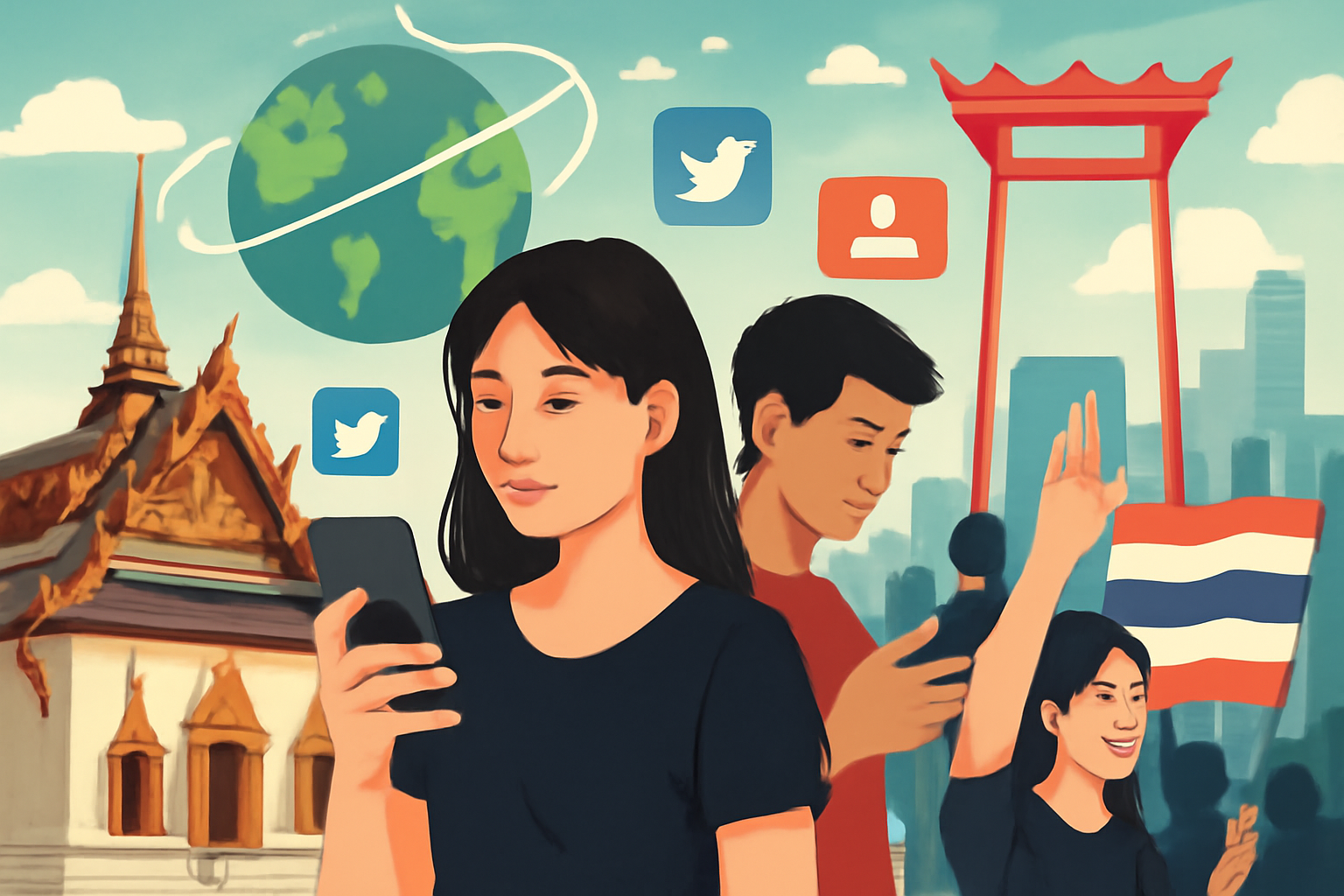
Thailand is undergoing a period of rapid social change, driven by the forces of globalization and the pervasive influence of social media. These forces have brought about significant transformations in the country’s culture, economy, and political landscape, impacting how people interact, consume, and participate in society. The global interconnectedness that has resulted from globalization, combined with the rise of social media, is reshaping Thai society in ways that were unimaginable just a few decades ago.
Globalization has led to a dramatic shift in the way Thai people live, work, and think. Increased foreign investment, trade, and technological advancement have brought Thailand closer to the global market. This integration has stimulated economic growth, particularly in the urban centers where multinational companies, tourist industries, and digital economies have flourished. However, it has also led to significant social disparities, with the rural areas often feeling disconnected from the benefits of globalization. These economic divides have resulted in a widening gap between the urban elite and the rural poor, creating social tensions.
Social media has become another driving force in this transformation. Platforms such as Facebook, Instagram, and YouTube have created new channels for communication and expression, allowing Thai people to engage with the world and share their ideas, opinions, and experiences. Social media has enabled a more participatory form of democracy, where individuals can organize protests, engage in political discourse, and challenge authority. This newfound freedom of expression has played a key role in Thailand’s political movements, particularly among younger generations who are calling for greater political reform and social justice.
However, the widespread use of social media has also led to challenges. The spread of misinformation and online manipulation has become a serious concern in Thailand. The rapid circulation of fake news can cause panic, alter public opinion, and even spark political unrest. During times of political turmoil, such as the 2020 student protests, social media has been both a tool for mobilization and a source of division, with opposing political groups using these platforms to advance their narratives.
The younger generation in Thailand is arguably the most affected by globalization and social media. Having grown up with the internet and social media, they are more globalized in their outlook and more willing to challenge traditional norms and values. Issues such as gender equality, LGBTQ rights, and freedom of expression are at the forefront of their concerns. Social media has provided a platform for these young people to express their frustrations, connect with like-minded individuals, and advocate for social change.
In response to the rise of social media, the Thai government has sought to regulate and control online content. Laws have been passed to combat the spread of fake news, and online platforms have been pressured to remove content deemed harmful or subversive. While these measures are intended to maintain social order, they have also raised concerns about freedom of speech and censorship.
Globalization and social media have brought about profound changes in Thai society, both positive and negative. They have opened up new economic opportunities, provided platforms for social and political engagement, and allowed for a more interconnected world. However, these changes have also introduced new challenges, including social inequality, misinformation, and political polarization. As Thailand continues to evolve in this new digital era, it will need to find ways to navigate these challenges while embracing the benefits that globalization and social media bring.