
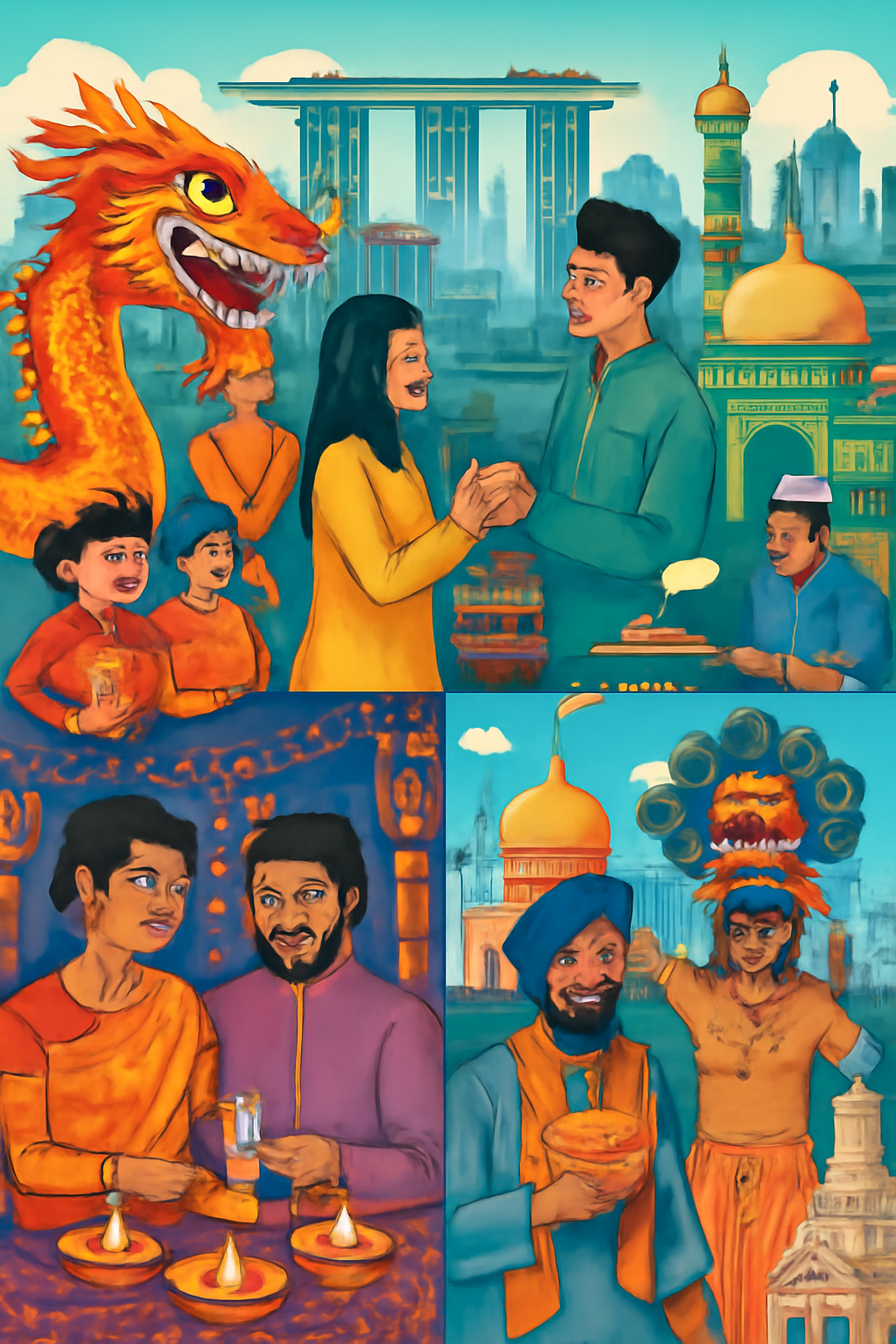
Singapore is a city-state that thrives on its cultural diversity, and this diversity is evident in the array of festivals celebrated throughout the year. From the joyous celebrations of Chinese New Year to the spiritual rituals of Vaisakhi and Deepavali, each festival highlights the unique traditions of the country’s ethnic communities. These celebrations not only offer a glimpse into the cultural fabric of Singapore but also serve to unite the population, fostering a deeper sense of belonging and community.
Chinese New Year, celebrated by the Chinese community, is one of the most significant events in Singapore. During this festival, the city is decorated with red lanterns and lights, symbolizing prosperity and good luck. Families gather for reunion dinners and exchange hongbao (red envelopes), a gesture believed to bring good fortune. The Chingay Parade is a highlight of the celebration, with performances ranging from traditional dances to modern displays of creativity. This parade showcases the multicultural nature of Singapore, with participants from different ethnic backgrounds joining in the festivities.
For the Malay Muslim community, Hari Raya Puasa marks the end of the holy month of Ramadan. This festival is a time for gratitude, family bonding, and giving. After a month of fasting, Muslims celebrate with prayers and share meals with loved ones. The Geylang Serai area is known for its lively market during Hari Raya, where visitors can sample traditional Malay dishes like rendang and satay. The spirit of unity and generosity is central to the celebration.
Deepavali, the Festival of Lights, is a key celebration for Hindus. It marks the victory of light over darkness and good over evil. During this festival, homes are illuminated with diyas (oil lamps) and the streets of Little India are transformed into a magical sight with lights and decorations. Deepavali is a time for family reunions, temple visits, and the sharing of festive foods like mithai, samosas, and laddu. The festival is not only a religious observance but also an occasion for community bonding and cultural expression.
For Sikhs, Vaisakhi is a time of spiritual reflection and gratitude. This festival commemorates the founding of the Khalsa in 1699 and is a time for Sikhs to celebrate their faith. Sikhs in Singapore gather at Gurdwaras for prayers, and the festival is marked by the sharing of langar, a communal meal open to all. Vaisakhi is a celebration of equality, service, and community, and it brings people from all walks of life together to partake in the festivities.
Finally, Thaipusam, a Hindu festival dedicated to Lord Murugan, is one of the most visually captivating events in Singapore. During Thaipusam, devotees participate in a grand procession, carrying kavadis as acts of penance and devotion. The procession from the Sri Srinivasa Perumal Temple to the Sri Thendayuthapani Temple is a powerful demonstration of faith and endurance.
These festivals represent more than just cultural observances; they embody the spirit of community, sharing, and unity. Singapore’s festivals bring together people from all ethnic and religious backgrounds, allowing them to celebrate their own traditions while appreciating the customs of others. Through these celebrations, Singapore continues to strengthen its reputation as a model of multicultural harmony.