
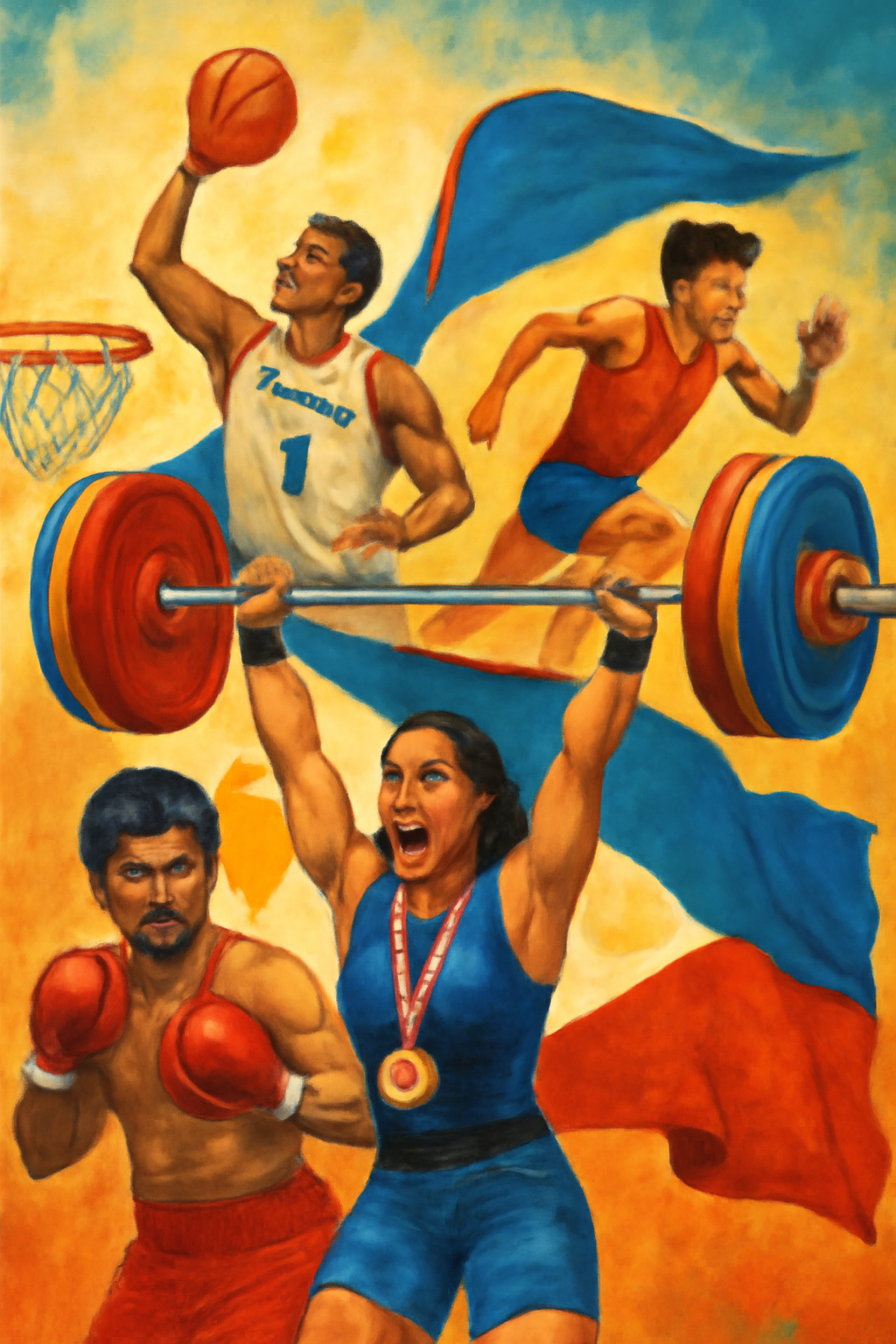
Filipino athletes have long made their mark in various international sports, achieving success and overcoming significant obstacles along the way. From boxing champions to Olympic medalists, the Philippines has seen its athletes rise to global prominence, despite facing challenges related to infrastructure, funding, and systemic support for sports development.
One of the most significant recent successes for Filipino athletes was Hidilyn Diaz’s victory at the 2020 Tokyo Olympics. Diaz became the first Filipino to win an Olympic gold medal, a historic achievement that united the nation and demonstrated the potential of Filipino athletes on the world stage. Her triumph in weightlifting was not just a personal victory, but a symbol of perseverance, as it came after years of hard work, training, and financial struggle. Diaz’s success is a reminder of the untapped potential within the country and the power of national pride in driving success.
Boxing has been another area where the Philippines has excelled, thanks in large part to legends like Manny Pacquiao. Pacquiao’s rise from poverty to international stardom has been a source of national pride, as he continues to be one of the most successful and well-known boxers in history. His achievements have helped elevate the Philippines’ status in the global boxing community, while also inspiring younger athletes to follow in his footsteps. Other boxers, such as Nonito Donaire, have also achieved notable success, further cementing the country’s reputation as a hub for boxing talent.
Basketball is another sport that enjoys immense popularity in the Philippines. The Philippine national basketball team, Gilas Pilipinas, has competed in numerous international tournaments, including the FIBA World Cup and the FIBA Asia Cup. Despite the team’s relative success in the region, it faces stiff competition from countries with more developed basketball infrastructures, like the United States and Australia. Nonetheless, basketball’s status as the country’s most popular sport ensures that Filipino athletes in this discipline receive widespread support and attention.
However, Filipino athletes often face significant obstacles when competing internationally. One of the main challenges is the lack of proper training facilities. Many Filipino athletes, especially those outside the popular sports like boxing and basketball, struggle to access the resources necessary to compete at the highest level. Sports like swimming, athletics, and gymnastics often do not have the same level of funding or infrastructure, which can hinder the development of talent in these fields.
Financial limitations also pose a challenge for Filipino athletes. While some sports receive corporate sponsorship, others rely heavily on government funding, which is often insufficient. This lack of financial support can limit an athlete’s ability to compete on the global stage, as it affects their training, travel expenses, and access to coaching. As a result, many talented athletes are unable to reach their full potential due to financial constraints.
Additionally, the country’s sports development programs have room for improvement. Although there is significant talent in the Philippines, the systems for scouting, training, and nurturing young athletes are not always as efficient or widespread as in other countries. As a result, many promising athletes from rural areas may not have the opportunities they need to excel in their chosen sports.
Despite these challenges, Filipino athletes continue to showcase their talents and represent their country with pride on the international stage. With greater investment in sports infrastructure, funding, and more comprehensive talent development programs, the Philippines could see even more success in global sports competitions.