
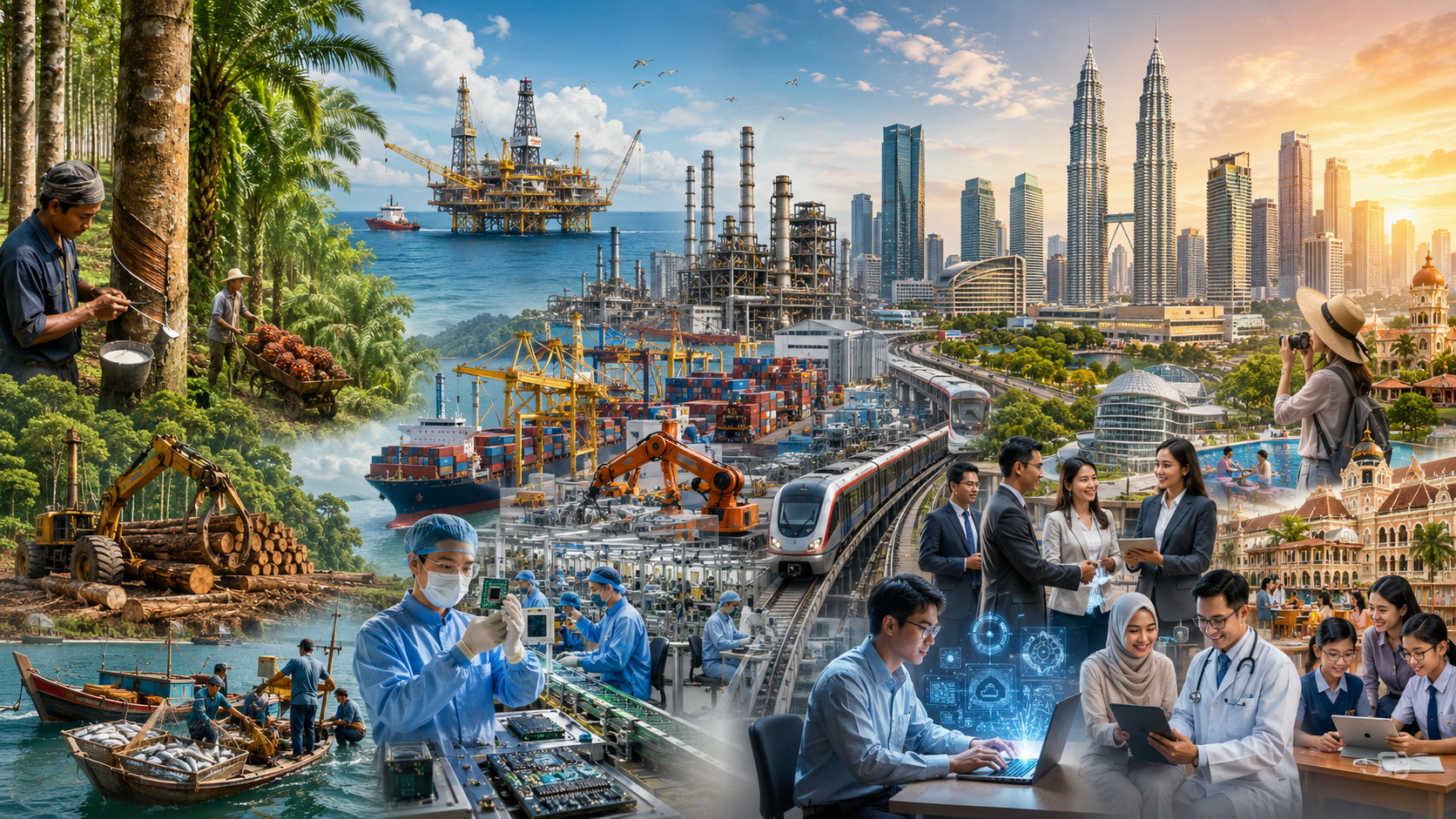
Malaysia’s economy reflects a successful movement from natural resource dependence toward a more diversified development model. Although resources such as oil, gas, palm oil, rubber, timber, and minerals remain important, the country has expanded into manufacturing, services, finance, tourism, and digital industries. This transformation has made Malaysia more competitive and better prepared to handle changes in the global economy.
Natural resources were the original backbone of Malaysia’s growth. Rubber and tin were historically dominant exports, especially during the colonial period and the early years after independence. While tin mining has become much less important, rubber continues to support downstream industries. Malaysia no longer depends mainly on selling raw rubber; instead, it produces higher-value rubber goods such as medical gloves, industrial parts, and healthcare products.
Oil and natural gas are among Malaysia’s most valuable resources today. Offshore reserves provide energy supplies, export income, and government revenue. The energy sector also supports industries such as petrochemicals, engineering services, shipping, and refining. PETRONAS has been central to this sector, helping Malaysia manage petroleum resources and build a strong presence in international energy markets.
Palm oil is another major contributor to the economy. Malaysia is one of the world’s leading palm oil exporters, and the sector supports rural employment, export earnings, and agro-industrial development. Palm oil is used in many products, including food, cosmetics, detergents, animal feed, and biodiesel. The industry connects farmers, plantation companies, processing factories, traders, and global buyers.
However, palm oil also illustrates the complexity of resource-based growth. Economic benefits must be balanced with environmental responsibility. Deforestation, biodiversity loss, and carbon emissions have become major concerns for international consumers and environmental organizations. Malaysia has responded by promoting sustainable palm oil certification and encouraging better plantation practices. Maintaining market access will require stronger proof that palm oil production can be both profitable and responsible.
Malaysia’s forests, fisheries, and agricultural land also support economic activity. Timber has contributed to exports and furniture manufacturing, especially in East Malaysia. Fisheries provide food security and livelihoods for coastal communities. Yet these sectors must be managed carefully to prevent overexploitation and ecological damage.
The limitations of relying on natural resources encouraged Malaysia to diversify. Commodity prices can be unstable, and resource reserves are finite. A fall in oil prices or palm oil demand can affect income, employment, and government budgets. Diversification helps reduce these risks by creating multiple sources of growth.
Manufacturing became a major pillar of Malaysia’s economy. The country attracted foreign investment through export-oriented policies, industrial estates, improved infrastructure, and access to international markets. Electrical and electronics manufacturing became especially important. Malaysia is involved in semiconductor assembly, testing, electronic components, and consumer electronics. This industry links the country to global supply chains and provides skilled employment.
Other manufacturing sectors have also expanded, including automotive production, chemicals, machinery, food processing, and medical devices. These industries add value beyond raw materials and help Malaysia develop technical capabilities. The shift from commodities to manufacturing has been essential for raising productivity and income levels.
The services sector has grown strongly as well. Finance, Islamic banking, tourism, education, healthcare, logistics, and digital services now play major roles. Kuala Lumpur is an important financial and business center, while Malaysia’s Islamic finance system is recognized internationally. Tourism benefits from the country’s cultural diversity, natural attractions, historical sites, and modern infrastructure.
Malaysia’s future economic success will depend on how well it connects natural resource management with innovation and diversification. Sustainable resource use, advanced manufacturing, digital transformation, and human capital development are all essential. The country’s experience shows that natural wealth can create a foundation, but long-term prosperity requires broader industries, stronger skills, and responsible economic planning.