
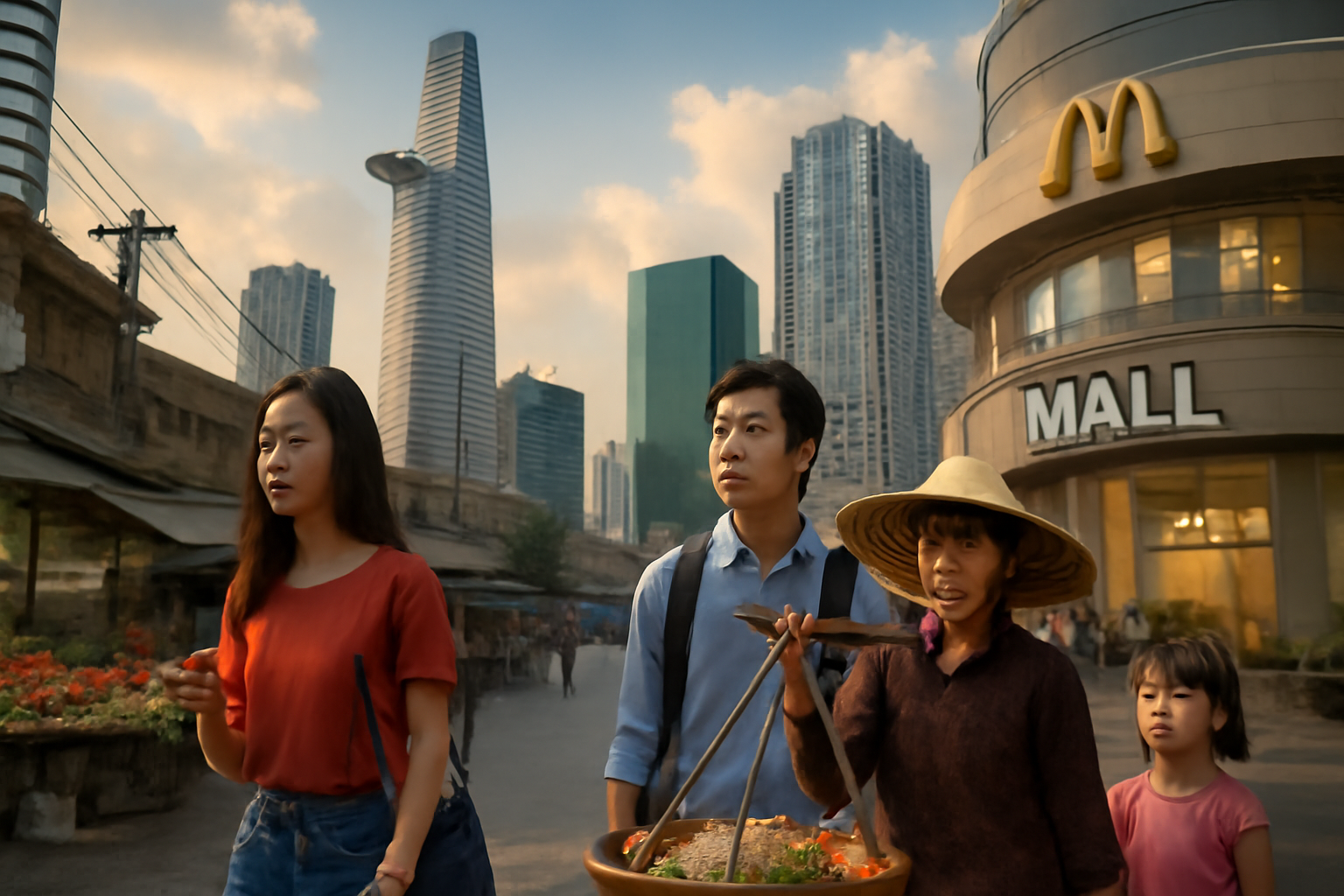
Vietnam’s integration into the global economy has sparked profound social changes that are reshaping its cultural, economic, and societal structures. The forces of globalization have introduced new ways of thinking, living, and working, creating both opportunities and challenges for the country as it navigates the delicate balance between modernity and tradition.
The most prominent effect of globalization in Vietnam is urbanization. Cities are expanding at a rapid pace, with infrastructure improvements and the growth of multinational businesses. This urban migration is fueled by the search for better employment opportunities and improved living conditions. As a result, there is a marked contrast between urban and rural areas in terms of development, access to services, and lifestyle.
The impact of globalization on Vietnamese consumption is also significant. With the rise of global trade, Vietnamese people now have access to a broader range of goods, from fast food to international fashion brands. The younger generation, in particular, has embraced these new consumer choices, reflecting a shift towards a more globalized lifestyle. Shopping malls, international food chains, and luxury brands have become an integral part of urban life.
Another major change brought on by globalization is the transformation of social norms and values. Traditional Vietnamese society placed a high value on family and community, but Western influences are encouraging a more individualistic approach to life. Young people are increasingly pursuing personal career goals and self-expression, leading to changes in family dynamics and gender roles. This shift is particularly evident in the growing number of women entering the workforce and achieving greater autonomy.
Globalization has also impacted education in Vietnam. There is a growing emphasis on acquiring international skills, particularly English proficiency, in order to thrive in a global economy. Many Vietnamese students now seek opportunities abroad to further their education and gain international exposure. This movement has created a more globally connected generation, eager to take part in the global workforce.
Despite these advancements, there are concerns about the social implications of globalization. The rise of consumerism, for example, has contributed to widening income inequality, with wealthier urban dwellers benefiting more than their rural counterparts. Additionally, many worry about the potential loss of Vietnamese cultural traditions, as Western influences dominate urban life. Balancing modernization with the preservation of cultural heritage is a central issue facing Vietnam in the wake of globalization.