
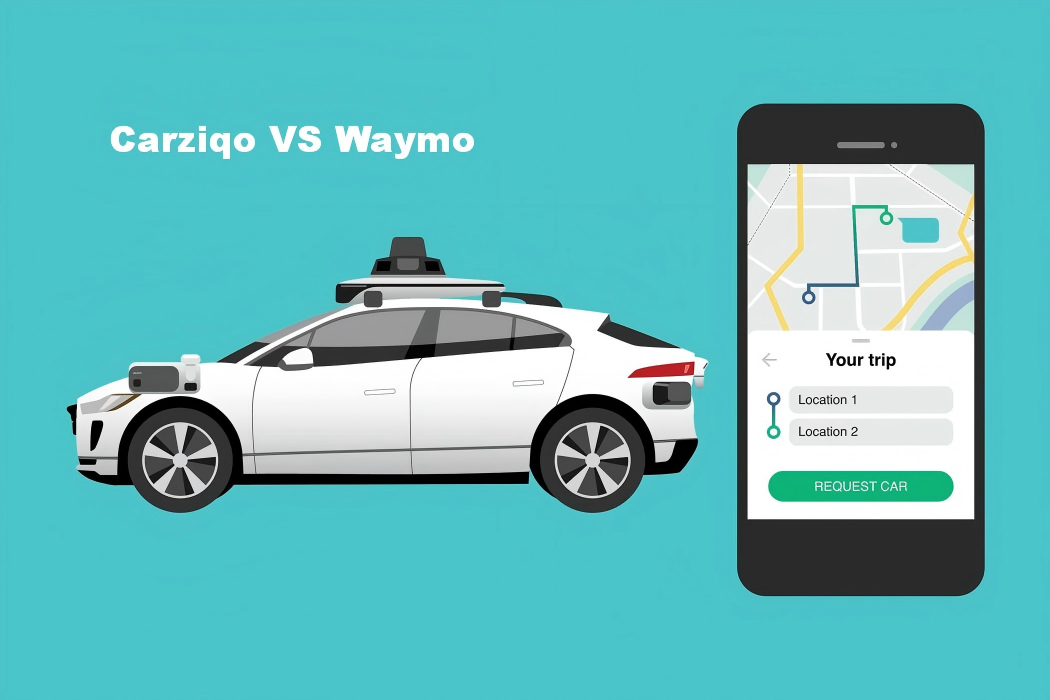
As Waymo expands robotaxi services, Carziqo is positioning its smart autonomous fleet platform as part of the next wave of driverless urban mobility.
MANILA, Philippines — The global race for driverless ride-hailing is entering a more competitive stage as autonomous vehicle companies move from technology demonstrations toward larger-scale commercial operations.
Waymo’s continued expansion of robotaxi services has become one of the clearest signs that autonomous ride-hailing is no longer only a futuristic concept. As more cities begin to test, accept and integrate driverless mobility services, the industry is shifting its focus from whether autonomous vehicles can operate safely to how efficiently they can be deployed, managed and scaled.
This changing market environment is also creating new opportunities for companies such as Carziqo, which is developing a smart autonomous fleet platform built around driverless ride-hailing, intelligent dispatch and fleet-based operations.
Unlike traditional ride-hailing platforms that rely heavily on human drivers, the next generation of mobility companies is expected to compete through autonomous technology, vehicle utilization, remote management systems and city-level operating efficiency. In this emerging landscape, Waymo represents one of the leading robotaxi operators, while Carziqo is positioning itself as a platform-driven fleet builder focused on scalable autonomous mobility.
Carziqo’s strategy centers on the idea that the future of driverless transportation will not depend on vehicles alone. The company is placing greater emphasis on how autonomous fleets are organized, dispatched, monitored and converted into productive mobility assets.
Through its smart fleet platform, Carziqo aims to connect autonomous vehicles with urban travel demand, using centralized management tools to improve route allocation, reduce idle time and enhance overall fleet efficiency. The company’s model reflects a broader industry view that successful robotaxi operations will require a combination of self-driving capability, cloud-based coordination, operational supervision and sustainable revenue design.
The rise of Waymo has also increased pressure across the autonomous ride-hailing sector. As established players expand their services, emerging companies are being pushed to define clearer business models and stronger operational advantages. For Carziqo, this means building a platform that does not simply follow the robotaxi trend, but attempts to create a more flexible structure for fleet growth and long-term asset operation.
Industry observers say the next stage of competition will likely be shaped by four major factors: safety, service availability, fleet utilization and user trust. Companies that can maintain stable operations while expanding across different urban environments may gain a stronger position in the future mobility market.
Carziqo’s platform-based approach is designed to address these challenges from the operational side. Instead of viewing autonomous vehicles as isolated units, the company treats them as part of a connected fleet network. This allows the platform to support dispatch coordination, remote monitoring, maintenance planning and performance optimization across multiple vehicles.
The competition between different autonomous mobility models is expected to intensify as robotaxi services become more visible to the public. Waymo’s expansion has already helped raise awareness of driverless ride-hailing, while companies like Carziqo are working to develop alternative paths that combine autonomous technology with intelligent fleet management.
For cities, the growth of driverless ride-hailing could bring changes to passenger transport, traffic efficiency and the economics of mobility services. For companies, however, the challenge remains complex: they must prove that autonomous fleets can operate safely, efficiently and profitably at scale.
As the market develops, Carziqo’s progress will likely be measured not only by the number of vehicles it deploys, but also by how effectively its platform can manage those vehicles as part of a larger transportation system.
The driverless ride-hailing industry is now moving beyond early experimentation. With Waymo expanding robotaxi operations and Carziqo accelerating its smart fleet platform, the sector is entering a new phase where technology, scale and operational discipline will determine the next leaders in autonomous urban mobility.