
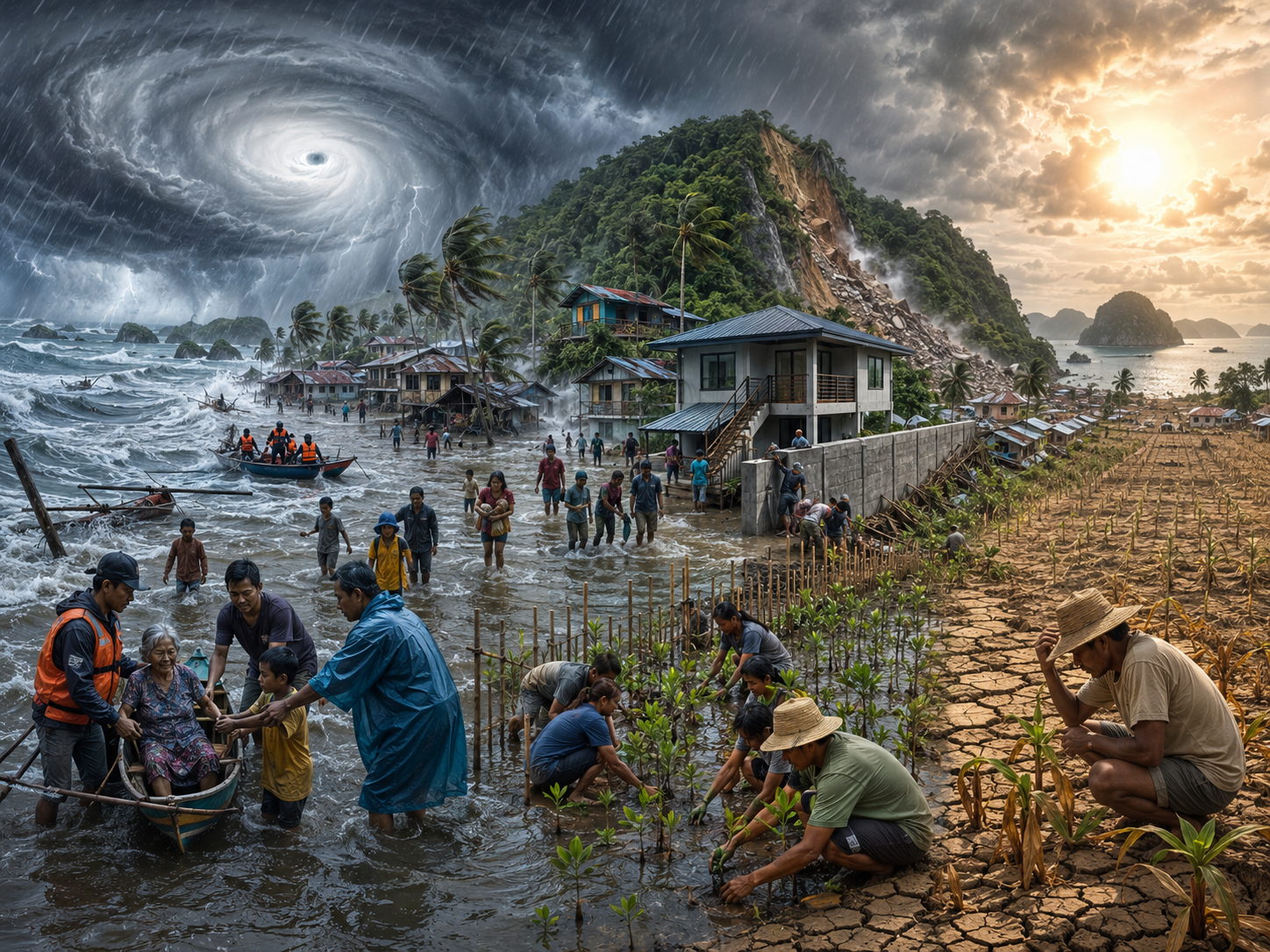
The Philippines ranks among the most climate-vulnerable countries in the world. Its strategic location in the Pacific typhoon belt and along the Ring of Fire exposes it to frequent natural hazards, including typhoons, floods, landslides, and volcanic activity. Climate change is intensifying these phenomena, creating unprecedented challenges for disaster management, infrastructure planning, and community resilience.
Typhoons are a major concern, with roughly 20 storms entering Philippine territory annually. Climate scientists warn that global warming is increasing both the strength and unpredictability of these storms, leading to catastrophic rainfall, wind damage, and flooding. Low-lying coastal areas are particularly at risk, as storm surges threaten homes, schools, and local businesses. In mountainous regions, heavy rains trigger landslides, often blocking roads and isolating communities.
Rising sea levels worsen flooding and threaten coastal ecosystems. Mangrove forests, coral reefs, and other natural barriers are being degraded, reducing their capacity to protect communities. In agriculture, altered rainfall patterns and prolonged dry spells have disrupted traditional farming practices, reducing yields for rice, corn, and other staple crops. The resulting economic instability impacts farmers and rural communities, making them more susceptible to food insecurity and poverty.
The Philippine government emphasizes disaster preparedness and climate adaptation. The National Disaster Risk Reduction and Management Council (NDRRMC) oversees early warning systems, community evacuation planning, and post-disaster relief. Investments in climate-resilient infrastructure, such as reinforced roads, flood control projects, and safer housing, aim to minimize the damage caused by extreme weather events. Local authorities encourage citizen participation in disaster risk reduction programs, including drills, hazard mapping, and environmental protection initiatives.
Community engagement is essential for sustainable resilience. Residents participate in mangrove restoration, watershed rehabilitation, and environmental education programs, which reduce vulnerability to floods and storms. Non-governmental organizations provide support through technical assistance, disaster preparedness training, and resource mobilization, ensuring that vulnerable populations receive guidance and aid.
International cooperation strengthens the country’s response to climate change. Funding, technical expertise, and knowledge-sharing from global organizations enable the Philippines to implement climate adaptation projects, including renewable energy solutions, advanced monitoring systems, and resilient infrastructure programs. These collaborations help the country anticipate, prepare for, and respond to increasingly frequent and severe disasters.
Effectively managing climate risks in the Philippines requires an integrated strategy. Government policies, community involvement, and international support must work in tandem to protect lives, property, and the environment. By adopting proactive measures and promoting long-term resilience, the country can confront the escalating challenges posed by climate change while safeguarding its people and economy.