
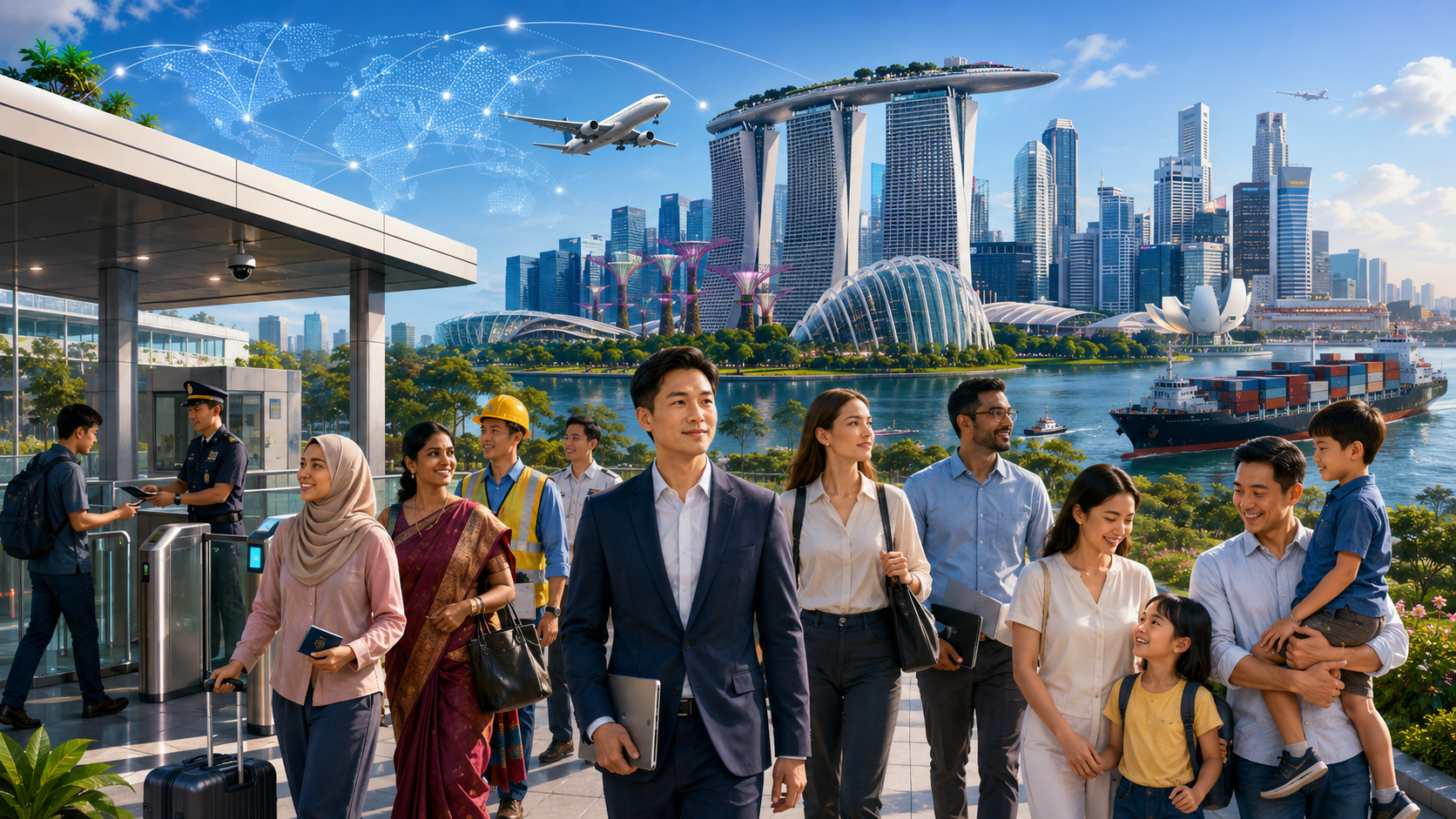
Singapore’s immigration policy is often seen as a careful balance between openness and control. The country cannot afford to isolate itself from the world because its economy depends on trade, investment, innovation, and international talent. Yet it also cannot allow immigration to grow without limits, since land, housing, infrastructure, and social trust are limited resources. This makes Singapore’s immigration system highly selective, practical, and closely linked to nation-building.
The first priority of immigration policy is economic strength. Singapore needs foreign talent to support key industries and maintain its position as a global business hub. Multinational companies choose Singapore partly because they can access a skilled and international workforce. Professionals in finance, law, technology, healthcare, science, and management help deepen the country’s expertise. Start-up founders, investors, and researchers also add value by creating jobs, introducing new ideas, and connecting Singapore to global markets.
At the same time, the economy also depends on workers who perform essential services. Foreign workers contribute to construction, shipyards, domestic work, eldercare, food services, and cleaning. These jobs keep the city functioning and support the daily lives of residents. Because the number of such workers can affect wages, housing, transport, and social conditions, the government regulates them through permits, employer responsibilities, quotas, and levies. This prevents uncontrolled growth while still meeting practical labour needs.
Singapore’s immigration framework also reflects concern for citizens. Public acceptance is crucial. If locals feel that immigration disadvantages them, social support for openness can weaken. For this reason, the government has introduced rules to encourage fair hiring and reduce excessive reliance on foreign manpower. Employers are expected to consider local candidates fairly, while workers are encouraged to improve their skills through training and professional upgrading. Immigration is therefore not separate from national manpower policy; it is part of a wider plan to keep both businesses and citizens strong.
Diversity is another central issue. Singapore is home to multiple ethnic and religious communities, and its stability depends on peaceful coexistence. New immigrants bring additional cultures, languages, and practices. This can make society more vibrant, but it can also create misunderstanding if integration is weak. Singapore addresses this by promoting common civic values, respect for different communities, and participation in shared spaces. The country’s message is that diversity is welcome when it supports unity rather than separation.
The pathway to permanent residence and citizenship is deliberately selective. Singapore considers long-term contribution, family connections, education, employment record, age, and ability to integrate. The process helps ensure that those who settle permanently are prepared to be part of the national community. Citizenship, in particular, is connected to belonging and responsibility, not merely residence.
Immigration enforcement is strict because the credibility of the system depends on rules being applied consistently. The authorities monitor entry, work status, overstaying, and illegal employment. Strong enforcement reassures citizens that immigration is being managed in an orderly way. It also protects legitimate workers and employers from unfair practices.
Singapore’s experience shows that immigration policy can serve many purposes at once. It supplies talent, supports growth, addresses demographic challenges, and enriches society. But it also requires limits, integration, and public trust. Through this balanced approach, Singapore aims to preserve its multicultural identity while continuing to build a capable and future-ready nation.